
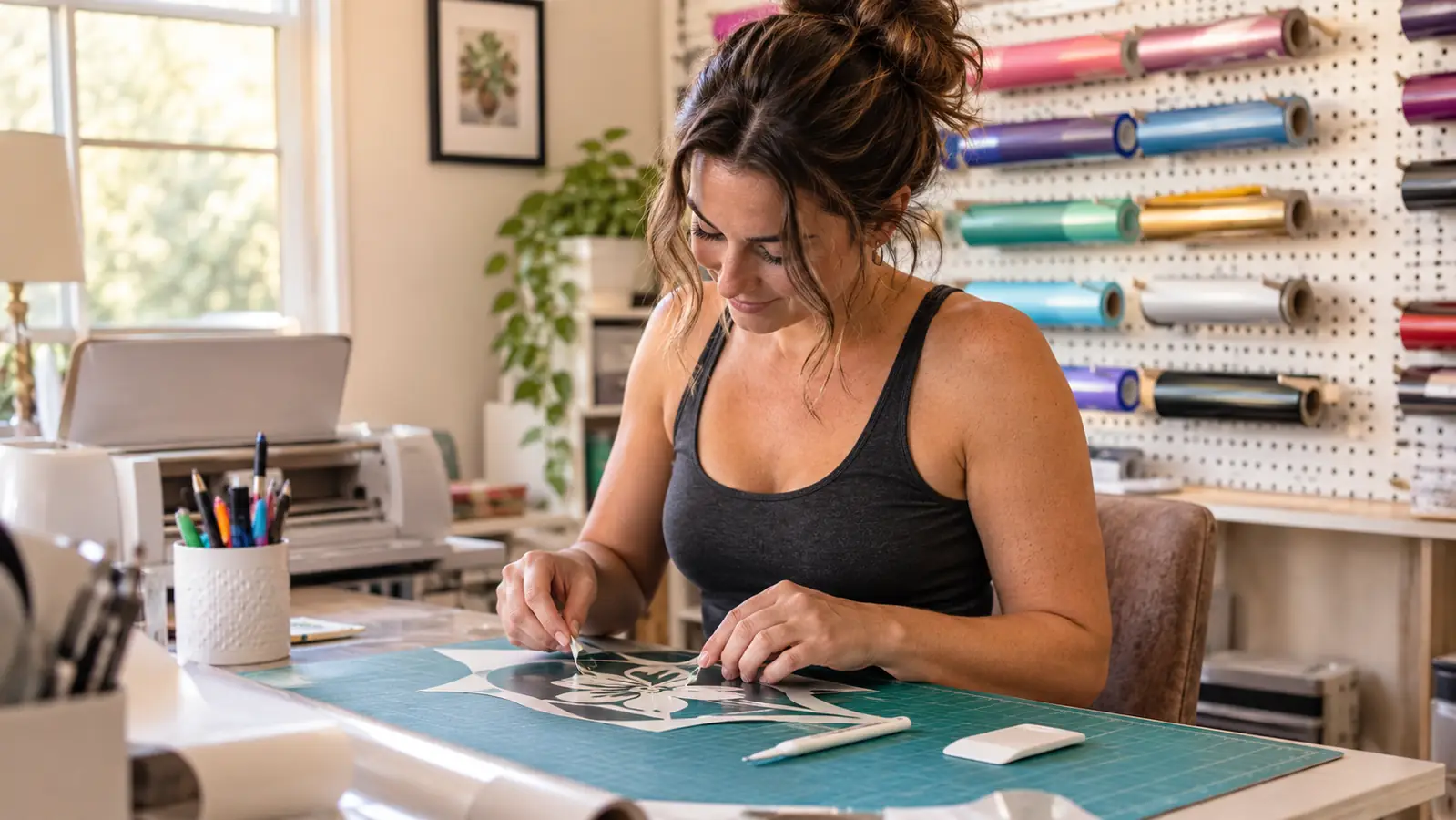
Four years ago I brought home a Cricut cutting machine, a roll of vinyl, and no idea what I was doing. Two hours later I was picking at a curled corner of adhesive with my thumbnail, ruining the edge of a monogram I had spent twenty minutes lining up. The Cricut Basic Tool Set is what fixed that. Five small tools, plastic handles and steel tips, 5.28 ounces for the whole set. I have used the same one every week since, at a folding table in my spare bedroom in Columbus, for market orders, church shirts, and a steady stream of name labels for my granddaughter's school folders.
I am not a full-time maker and I am not going to pretend otherwise. I started cutting vinyl four years ago because a friend needed shirts for a volleyball team and I said yes before I thought it through. Now I take a table at a local craft market a couple of Saturdays a month, and my husband Ray runs the heat press on the busy weekends while I weed. That is the context for this review. I am not testing tools in a studio under perfect light. I am using them at a table with a pegboard wall behind me and a closet shelf full of blanks, and I notice immediately when something slows me down.
The Quick Verdict
Four years on one set and the weeder is still the first thing I pick up. The scissors are the weak piece, and the tip is too coarse for very small lettering.
Amazon Check Today's Price →The Fix for the Monogram I Nearly Ruined
Five pieces, 5.28 ounces, and a weeder that has outlasted every other small tool on my table. If you are still lifting vinyl with a fingernail, start here.
Amazon Check Today's Price on Amazon →How I've Used It
The set lives in a shallow bin on the cart beside my machine, and it comes out before every single cut. The order almost never changes. I cut the design, then I use the spatula to lift it off the mat without curling the edges, then the weeder to pick the little islands of vinyl out of letters like A, O, and R. The scraper burnishes the design onto the shirt or the tumbler. The scissors trim the transfer tape. When the job is a set of shirts for Nia's volleyball team, that whole cycle runs maybe twenty times in an evening, and my hands are doing it while I am thinking about something else.
What I did not expect was how much of the work happens around the machine rather than in it. Pressing the vinyl flat onto the mat so it does not shift mid-cut. Scraping the mat clean afterwards. Laying transfer tape down without a bubble in it. The scraper and the spatula handle all three, and they are the two pieces I would miss most if the bin walked off. That is a smaller thing than it sounds until you have pressed a shirt with a bubble under the tape and watched the design lift at one corner. The scraper is what stops that.
Four years of that cycle adds up. I have gone through more blades than I can count and more rolls of vinyl than I want to admit. The tools have not changed. The handles have no cracks, the steel has no rust spots, and nothing has come loose. The only real wear is on the scissors, which I dulled cutting something I should not have been cutting, and which still snips thread and tape without complaint. One Saturday last October I had thirty-four shirts to finish for a church harvest sale, and I started weeding at seven in the morning with the radio on and did not stand up until nearly noon. The same weeder did all thirty-four, and the tip never slipped once.
What's Actually in the Box
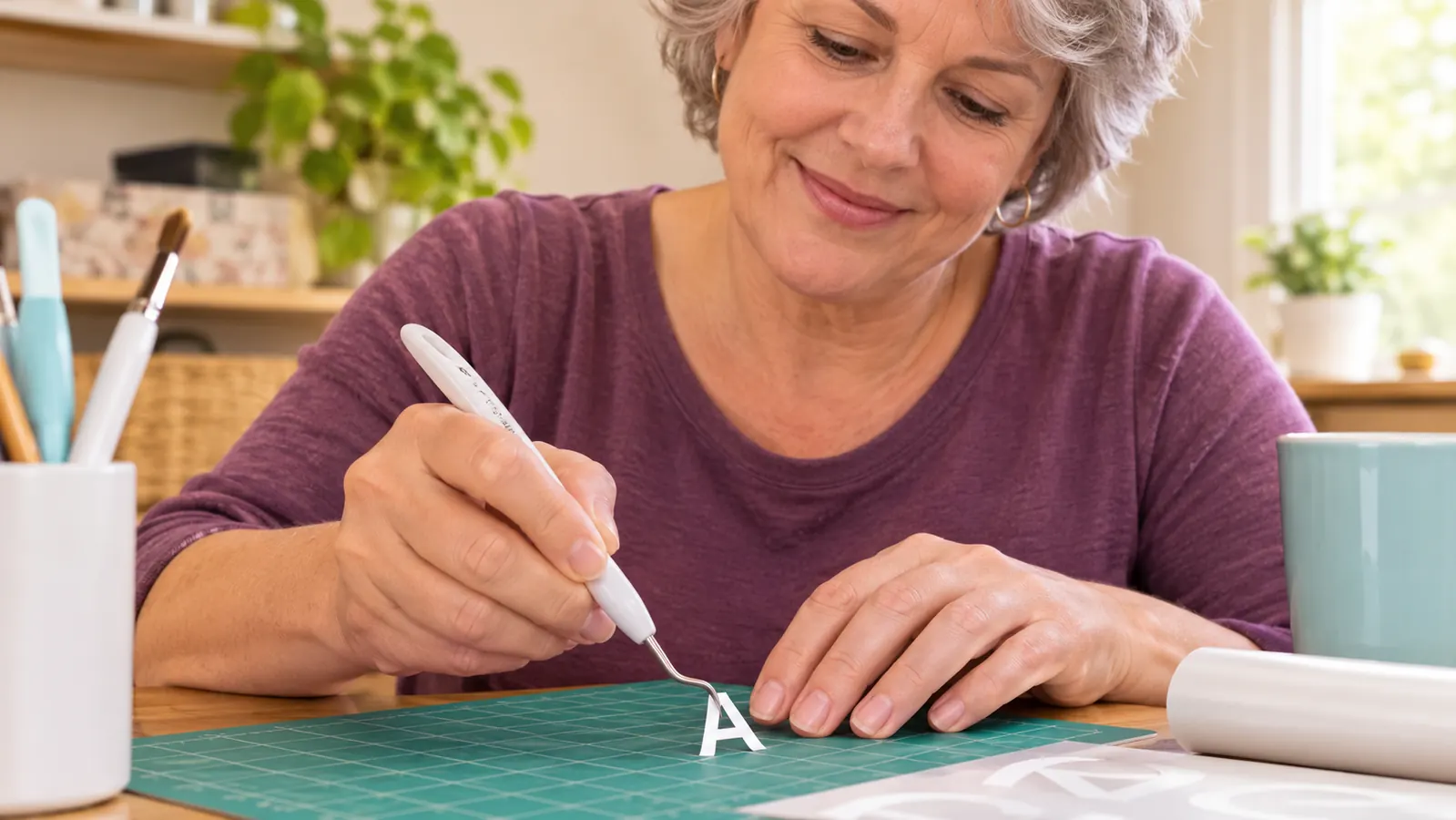
Five pieces, and the listing is honest about every one: a spatula, a weeder, a scraper, a pair of scissors, and a pair of tweezers. Plastic handles, steel tips, 5.28 ounces across the whole set. The package measures 10.28 by 6.5 by 0.94 inches, so it slides onto a closet shelf or into a drawer without eating much space, which matters in a spare bedroom where the table is also the wrapping station and the ironing board.
The weeder is the piece that earns the set its keep. It lifts the small cut pieces off the mat and off the backing, the ones a fingernail turns into a smeared mess. Every letter with a hole in it, every dot on an i, every scrap of negative space inside a monogram. The spatula does the other end of the same job. It slides under a finished design and lifts it off the mat in one piece instead of letting it curl and stick to itself, which is the most common way I have ruined a good cut.
The scraper burnishes. You lay vinyl on a shirt or a tumbler, then press it flat with the scraper so the transfer tape grabs evenly and the edges do not lift. It also scrapes the mat clean when a cut has left fuzz behind. The scissors snip tape and trim backing. The tweezers place small pieces, and they are the tool I use least of the five, mostly for tiny text where my fingers are too blunt to be trusted. When I do a run of tumblers, I keep the scraper in my right hand the whole time and work around the curve in short strokes rather than one long press, because one long press on a curved surface is how you get a crease in the tape.
Nothing here is clever, and that is the point. These are five versions of one idea, which is that a hand should be able to do a precise job without a fingernail or a kitchen knife. If you have ever weeded a two-inch decal with a thumbnail, you already know what the alternative costs you in ruined vinyl and temper.
What Four Years Did to Each Tool
Honest accounting, four years in. The weeder still has a tip sharp enough to catch an edge I can barely see. The spatula has a slight bend in it from the number of times I have levered a design off a mat, and it still slides under a full sheet without tearing it. The scraper has a couple of shallow gouges where I have caught the corner of a cutting mat, and the flat face is still flat, which is the part that matters.
The tweezers are the piece that surprised me. I expected them to be the first to fail, and they have not. They close evenly and grip a scrap of vinyl without me having to squeeze hard, which is not nothing when you are placing the same tiny piece for the ninth time. The scissors are the worn piece. Four years of transfer tape and the odd bit of cardstock has left them less crisp than they were, and they struggle with anything thicker than a couple of layers of cardstock. For tape and thread they are fine. For anything heavier I reach for my fabric shears.
What has not happened matters as much. No rust, no cracked handles, no loose joint on the tweezers. The set has been dropped on a tile floor more than once and nothing has broken. I have also knocked the whole bin off the cart twice, which is a loud way to learn that none of the five pieces is fragile. At 5.28 ounces the bin tips easily, and that is the only reason I have had to fish tools out from under the table. Once was in March, reaching past it for a roll of transfer tape, and the tweezers slid under the cart and sat there until I found them a week later behind a box of blanks.
Where the Kit Falls Short
The weeder is not fine enough for the smallest work I do. When I cut two-inch decals for Nia's water bottle, or a run of tiny name labels, the letters come out smaller than the tip can get into cleanly. I keep a separate hook with a finer point for that. It is not really a fault, since one tool cannot cover every size, but it is the reason I own more than five pieces and the reason I would not call this set complete on its own.
The scissors are the piece I would replace first. They are small, which is right for trimming transfer tape, and they are not built for anything heavier. I learned that the slow way with a sheet of magnet material that left them dull. It was a set of six fridge magnets for a neighbour's fundraiser, and by the third one I was sawing instead of cutting. If you cut a lot of cardstock, plan on a second pair of proper scissors rather than asking these to do a job they were not made for.
And the pieces have no home of their own. Mine live in a shallow bin on the cart and the tweezers end up at the bottom of it about once a week. That is a small annoyance with an easy fix, a drawer divider or a small tray, but it is worth knowing before you spend ten minutes looking for the tool you need halfway through a project.
What I Use Alongside It
Two things do more for my accuracy than any tool in the set. A good light directly over the table, because weeding is a seeing job more than a hand job, and I did not understand that until I stopped squinting. And a fresh cutting mat. A mat that has lost its tack will ruin a cut no matter how good your spatula is, and no tool can rescue vinyl that has shifted a sixteenth of an inch mid-pass.
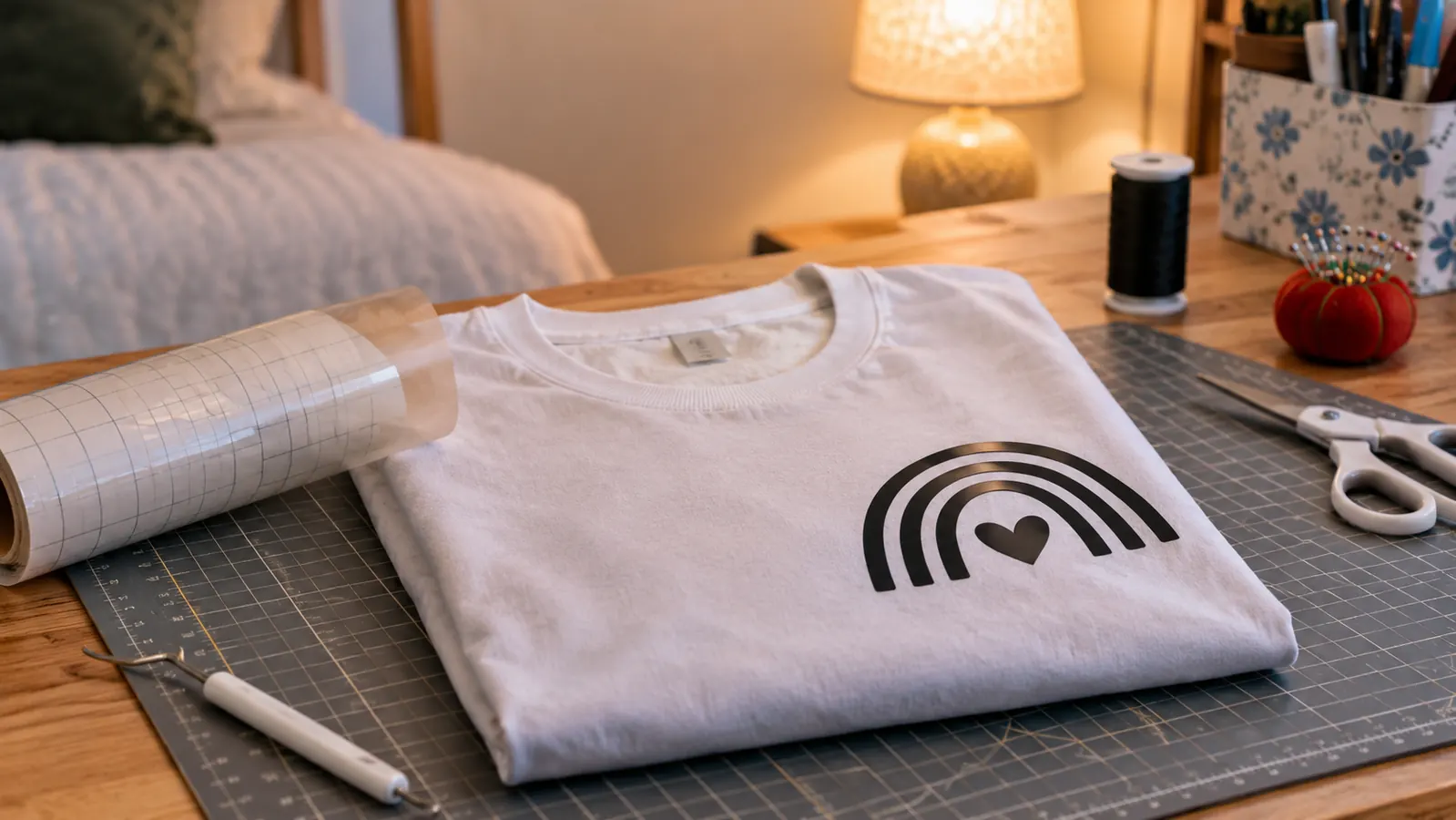
Beyond that, a lint roller for shirts before pressing, because a stray fiber under vinyl is permanent once the press closes. Transfer tape in a couple of widths so I am not trimming a wide roll down every time. A small dish for the vinyl scraps, which is the only thing I have found that stops them migrating across the table and sticking to my forearms. I also stopped buying the multi-packs of plastic weeding tools that show up in every starter bundle. The ones I tried bent at the tip inside a month, and the handles were too thick to hold for an hour. The Cricut tools are not the cheapest version of this idea. They are the ones still on my table. My light is a plain clamp lamp fixed to the pegboard, angled so it throws across the mat instead of straight down. Straight down puts your own shadow right where the weeder is going, and it took me an embarrassing amount of time to work that out.
What I Liked
- The weeder and spatula handle almost every daily job between them
- Steel tips have not rusted, bent, or come loose in four years of weekly use
- 5.28 ounces for the whole set, so it stores in a drawer or a shelf bin
- The scraper doubles as a burnishing tool and a mat cleaner
Where It Falls Short
- The weeder tip is too coarse for very small lettering
- The scissors dull quickly on anything heavier than tape and cardstock
- The tweezers are the least-used piece of the five
- No dedicated storage, so the small pieces wander in a bin
The weeder has lifted thousands of vinyl scraps off my mats, and four years on the tip is still sharp enough to catch an edge I can barely see.
Who This Is For
Anyone who cuts vinyl more than once a month and is still lifting designs with a fingernail. It is also the right first purchase alongside a new machine, ahead of another roll of vinyl, because this set changes how the work feels rather than how much you can cut. If you make shirts for a team, labels for a school, decals for a market table, or you just want your Saturday afternoon back, these are the pieces that stop the swearing. New Cricut owners who have not yet ruined a project will get the most out of it, because they have not yet learned the fingernail habit they will have to unlearn.
Who Should Skip It
If you cut paper once a year for a birthday card, a fingernail and the household scissors will get you through and you will not miss this. If your work is very fine detail, tiny lettering and delicate filigree, the weeder here is too coarse and you will end up buying a finer hook anyway, so start with that instead. And if you already own a weeding hook you like plus a decent scraper, you would be paying for three pieces you will rarely touch, which is a fair reason to leave it on the shelf.
Four Years, One Set, Still the First Thing I Pick Up
If your vinyl is still losing fights with your fingernails, this is the simplest fix I know. Five pieces, 5.28 ounces, and a weeder that has outlasted everything else in my bin.
Amazon Check Today's Price on Amazon →