
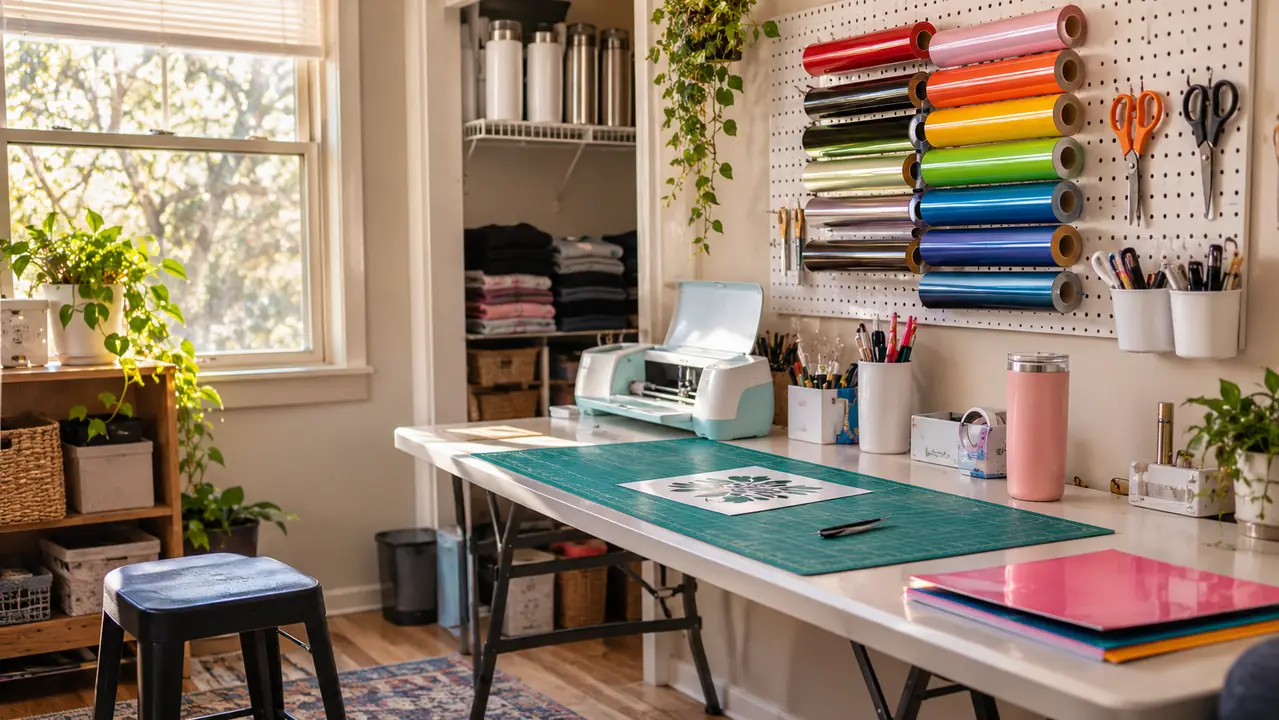
A tumbler peeled at the Saturday market last spring. Not the whole decal, just one corner of a name, curling up while a woman turned it over to check the price. I took it back, apologized, handed her a different one, and then drove home and stared at the shelf of vinyl rolls I had been buying out of habit.
Here is what I had been doing wrong. I bought whatever roll was cheapest that week, cut it on the same settings, and blamed the machine when letters tore coming off the backing. Frisco Craft Glossy White Permanent Vinyl, the 12 inch by 30 foot roll, was the first white I bought on purpose instead of by accident, and it is the only one I have reordered since.
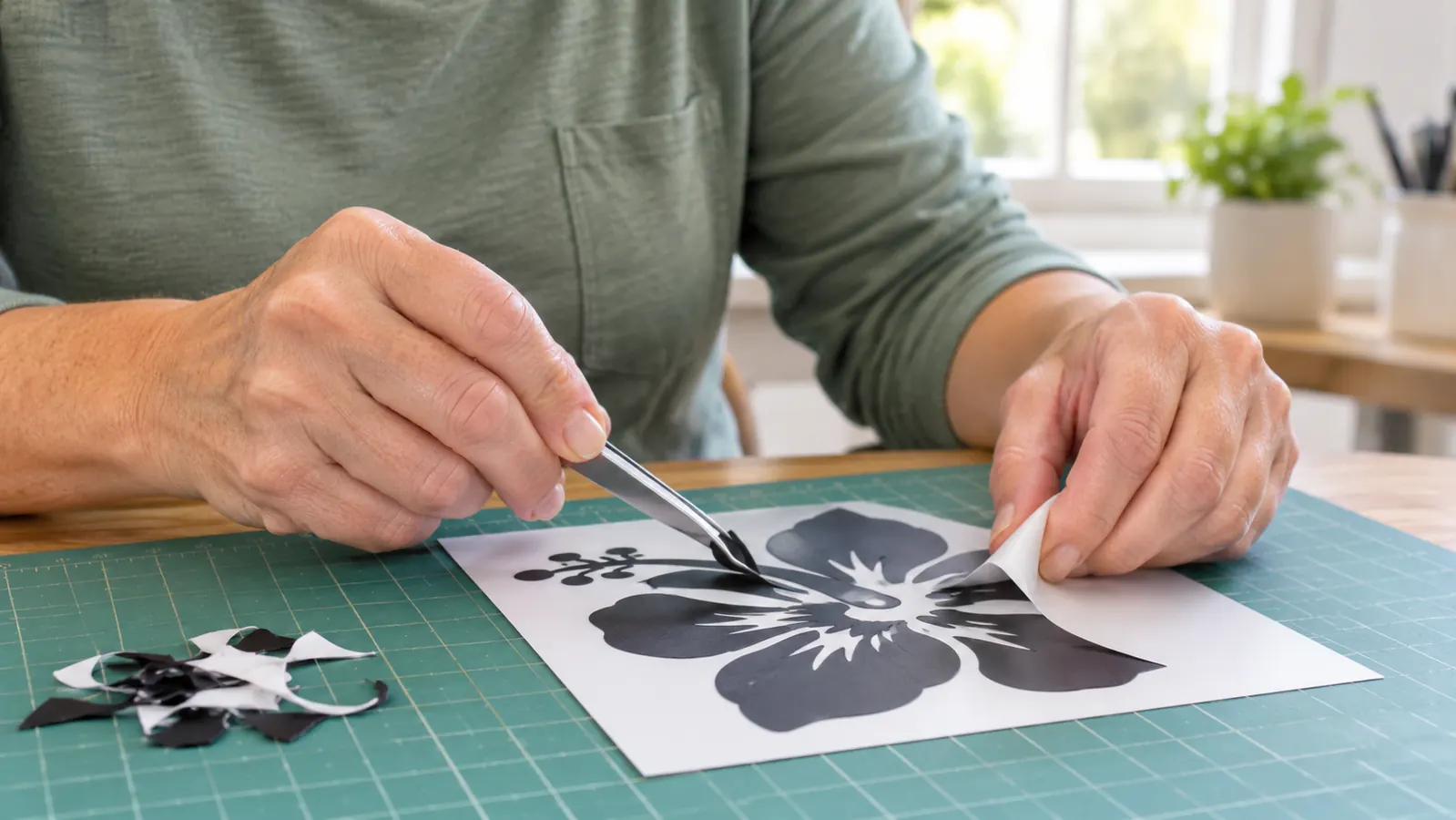
A roll of vinyl is not really one product. It is a thickness, a backing, an adhesive, and a finish all working together, and when one of those is off you find out at the weeding stage, with tweezers in your hand and no patience left, well before you get anywhere near a shirt. The Frisco Craft roll behaved at the weeding stage. That is the entire reason I stayed with it.
The settings matter more than people admit. On a Cricut I run the standard blade on the Iron on setting, which is what the product listing specifies. When a friend brings her Silhouette Cameo over we use Blade 1, Speed 3, Force 6, two passes, material set to Smooth. Those numbers come off the listing, not off me guessing, and they are worth writing on a sticky note and taping above the table.
The roll itself is 12 inches wide and 30 feet long, and it feeds without curling back on itself, which sounds like a small mercy until you have spent ten minutes fighting a roll that wants to roll back up while you are trying to load it straight. It sits on the pegboard between jobs and cuts clean at the very end of the roll, which not every roll does.
What I noticed first was the backing. Some rolls fight you, and the paper clings in a way that makes a clean peel feel like a negotiation. This one separates with a steady pull, and the cut pieces hold their shape long enough for me to line them up on transfer tape without rushing.
One line on the listing saved a whole set of team shirts: do not put water on it for twenty four hours after it goes down.
The white I stopped second guessing
Glossy white permanent vinyl on a 12 inch by 30 foot roll, rated waterproof and fade resistant, built for smooth surfaces indoors and out. Today's price is on the listing.
Amazon Check Today's Price on Amazon →I have the water rule taped above the table now. The listing says not to wash the vinyl with water until 24 hours after it has been applied, and I had been wiping finished tumblers down with a damp cloth within the hour because they looked dusty under the kitchen light. That is the sort of plain, unglamorous instruction that decides whether a decal lasts a season or lifts in somebody's sink.

The listing rates it waterproof and fade resistant, and says it goes on smooth surfaces indoors and outdoors. After four years of market Saturdays, my honest read is that smooth is the word carrying all the weight. On a glass jar or a coated tumbler it sits down and stays. On a textured cooler lid or a raw wood sign you are asking a flat material to do something it cannot, and it will lift at the edges regardless of which brand you bought.
Two things I would tell you before you buy. A glossy finish shows every fingerprint, so I wipe each blank with rubbing alcohol and let it dry fully before I lay anything down, otherwise I spend ten minutes chasing smudges under a lamp. And a white design against a dark shirt forgives nothing, so a line that is slightly crooked reads as crooked from across the room. Neither of those is a defect. Both are things I wish someone had mentioned to me early.
Most weeks I am cutting names for Nia's volleyball team or a batch of decals for the church ladies, and Ray takes over the pressing on Saturdays when the orders stack up. The Frisco Craft roll is the part of the job I no longer think about. When a material stops being the thing that goes wrong, you notice how much room it was taking up in your head.
What I'd Tell You If We Were Sitting at My Kitchen Table
Buy one roll before you buy four. Cut a name you do not care about, weed it, stick it on a blank you were ready to throw out, and then leave it alone for a full day. If it lifts at the edge after that, you have learned something useful about the surface, and you found out before you committed a Saturday and a hundred blanks to it.
Write the settings down and keep them where you can see them. Standard blade on Iron on, or Blade 1, Speed 3, Force 6, two passes with material set to Smooth. A good share of the frustration people bring to my table at the market is a machine that did exactly what it was told with the wrong numbers fed into it.
And keep the roll flat and out of direct sun when you are not using it. Vinyl that has been cooked on a windowsill all summer behaves differently in the machine, and you will blame the material for something the weather did.
Cut it once and leave it alone for a day
12 inches by 30 feet of glossy white permanent vinyl, rated waterproof and fade resistant, for smooth surfaces indoors and outdoors. Wait the full 24 hours before water touches it.
Amazon See the Frisco Craft Roll on Amazon →