

The first time I had to cut forty decals for a school fundraiser, I had one roll of adhesive vinyl on the pegboard and a Saturday afternoon to get through it. That is how I ended up comparing Frisco Craft Permanent Vinyl against Oracal 651 instead of grabbing whatever the craft store had on the end cap. Both are permanent adhesive vinyl. Both feed through a desktop cutter. The difference shows up around hour three, when you are weeding small letters with a hook and the roll you chose decides whether you finish before supper. I have been cutting out of my spare bedroom in Columbus for about four years now, and I keep both of these on hand for different jobs.
Short answer: for long single-color runs, like a set of matching white team decals or a stack of name labels, Frisco Craft is the one I reach for. It is a 12 inch by 30 foot roll of glossy white with a permanent adhesive backing, and one continuous length means no splicing partway through a set. Oracal 651 is the better pick when the job calls for a color other than white, or when the decal goes on a vehicle or an outdoor sign that has to hold up for years. Oracal wins on fine detail and color choice. Frisco Craft wins on volume, waste, and getting a beginner through the first cut without guesswork.
| Frisco Craft Permanent Vinyl | Oracal 651 | |
|---|---|---|
| Format | One continuous 12 inch by 30 foot roll of glossy white | Sold as sheets and shorter rolls, so long runs need splicing or reloading |
| Color range | Glossy white, one color per roll | Dozens of shades, which matters when a school color has to match |
| Outdoor life | Listed as fade resistant and waterproof, with a 24 hour wait before washing | Long working track record on vehicles and outdoor signage |
| Cut settings | Printed on the listing: Cricut standard blade at iron-on; Cameo blade 1, speed 3, force 6, two passes, smooth material | Shared constantly in cutting groups, but not printed on the product you buy |
| Adhesive | Permanent adhesive backing, no water for 24 hours after applying | Permanent solvent based adhesive, also wants a day before washing |
| Fine detail | Cuts clean, but small serif numbers need patience and a slow pass | More consistent on thin script and small lettering |
| Best for | Matching sets, single-color runs, learning the machine | Color work, outdoor signs, anything going on a car |
How I Compared Them
Before I touched either roll, I cut the test file on a leftover scrap of sheet vinyl from a Christmas order, just to confirm the blade was still sharp and the mat still had tack. It tore through the small script on the second curve, which told me the blade was the problem and not the material. That matters, because the first thing most people blame when a cut goes wrong is the vinyl, and they go buy a different brand instead of a fresh blade. Once I swapped in a new blade, I ran the same file on the Frisco Craft roll and then on a sheet of Oracal 651, and I wrote the results on the back of an envelope: which one weeded clean, which one lifted at the corners, and how many tries each small letter took.
I ran the same cut file on both materials with the same machine and the same blade: a strip of two inch numbers, a line of small script, and one simple shape with a hole in the middle. One test cut each on a corner scrap before I committed anything larger. Then I applied samples to plastic tote lids for the indoor side of the test, since the Frisco Craft listing recommends smooth plastic as a surface, and I left a couple of pieces on a porch sign blank outdoors for a few weeks to see how they handled weather.
What I was watching for was not only whether each vinyl cut cleanly. I wanted to know how it behaved at the weeding stage, whether the backing released without curling up on itself, how the adhesive grabbed on the first press, and how much material I wasted when something went wrong. A roll that looks like the cheaper option is not cheaper at all if you throw away half of every sheet. My table is small and my time is smaller, so waste counts double.
Where Frisco Craft Wins
Thirty feet in one piece is the whole argument. When my granddaughter Nia's volleyball team needed matching decals for water bottles and a banner, I cut the entire set without stopping to reload or re-square a sheet. The roll stays on the pegboard, feeds straight off the hook, and the last decal in the batch is the same as the first. With sheet vinyl I lose the first ten minutes of every run lining up edges and taping down a mat, and the last ten sweeping scraps off the table. On a Saturday with a deadline, that adds up to the difference between finishing and not.
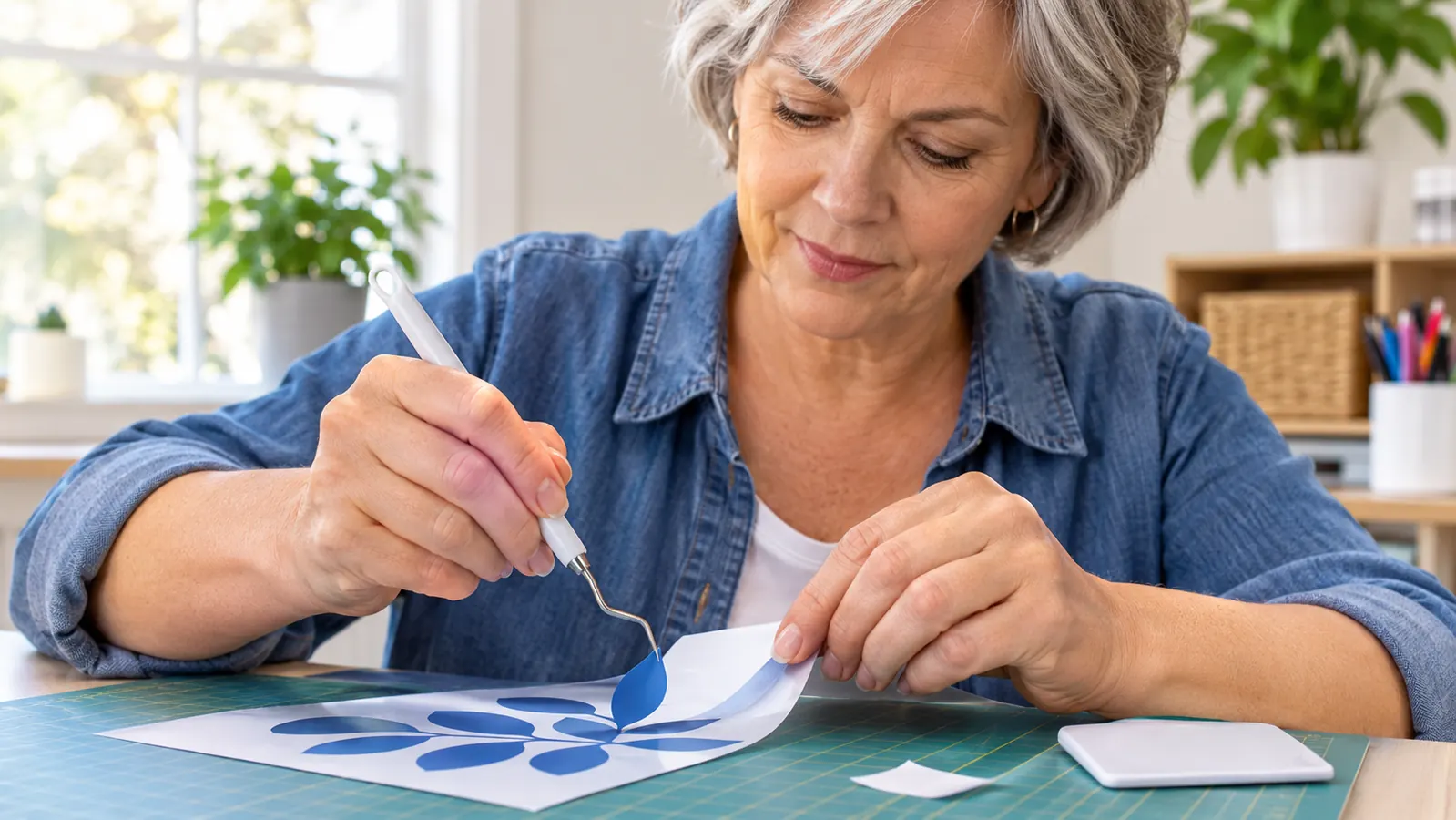
Part of why the roll format helps is that I am not a fast cutter. A two inch number, cut in a strip, takes me a few minutes to weed if the blade is tired, and I like to cut a whole row at a time and then sit down with the hook and the radio on. Because the Frisco Craft roll is 12 inches wide and 30 feet long, I can run a full row across the width, peel the roll forward, and run the next row without ever lifting the mat or re-taping a sheet. With a scrap of sheet vinyl, every row is a fresh alignment and a fresh chance to be half an inch off. I did the figuring one Sunday afternoon: a team set of thirty numbers plus a banner line came off roughly three feet of roll, with almost nothing wasted beyond the margin. The same set on sheets would have used most of a pack and left me with offcuts too small to keep.
The second thing Frisco Craft does well is tell you where to start. The listing prints cut settings for both common machines: Cricut with a standard blade and the material setting listed as iron-on, and a Silhouette Cameo at blade 1, speed 3, force 6, two passes on smooth material. That sounds like a minor detail until you have burned a whole evening guessing at pressure. It also lists the material as waterproof and fade resistant, and it says plainly not to wash the vinyl for 24 hours after applying. That last line is the one most listings skip and most beginners learn the hard way, usually with a shirt they were proud of.
Thirty feet of one color is not exciting. It is the difference between finishing forty matching decals in one sitting and making a second trip to the store on a Saturday.
Where Oracal 651 Wins
Color is where Oracal 651 earns its reputation. It comes in dozens of shades, and when someone hands you a school color and expects a real match, that range is the difference between saying yes and saying you cannot help. This Frisco Craft roll is glossy white and nothing else. White covers a large share of what I make, which is exactly why the roll lives on the pegboard, but the moment a customer wants navy or a metallic for a jersey, I am reaching for a different material entirely. There is no way to cut navy out of a white roll.
That gap showed up on a church league order last spring. Someone wanted navy to match a jersey, and I had nothing close on the pegboard. I drove to the craft store on a Thursday, came back with two shades, and neither was right under the light over my folding table. Oracal 651 would have had an actual navy, first try, and I would have spent that Thursday cutting instead of driving. That is not a knock on the Frisco Craft roll, since white is what it says it is and it does white very well, but it is the honest reason I keep a short stack of Oracal sheets on the closet shelf beside the blanks. The roll covers repetition. The sheets cover requests.
The other place Oracal pulls ahead is fine detail. Cutting the same small script on both, the Oracal piece weeded with fewer tear-outs on the thin curves, and the letters held their shape when I lifted them with the hook. The Frisco Craft sheet cut fine, but on the smallest serif numbers I had to slow down and go letter by letter, and one of them tore at the crossbar. On a large shape, a name, a simple logo, that gap does not matter. On a line of four point type it does. Oracal also carries the longer outdoor track record, which is why it is what I put on anything that lives on a car.
One Roll, Forty Matching Decals, No Reloading
This is the roll that stays on my pegboard for team sets, name labels and anything I cut in a batch: 12 inches by 30 feet of glossy white with a permanent backing, plus cut settings printed for Cricut and Cameo.
Amazon Check Today's Price on Amazon →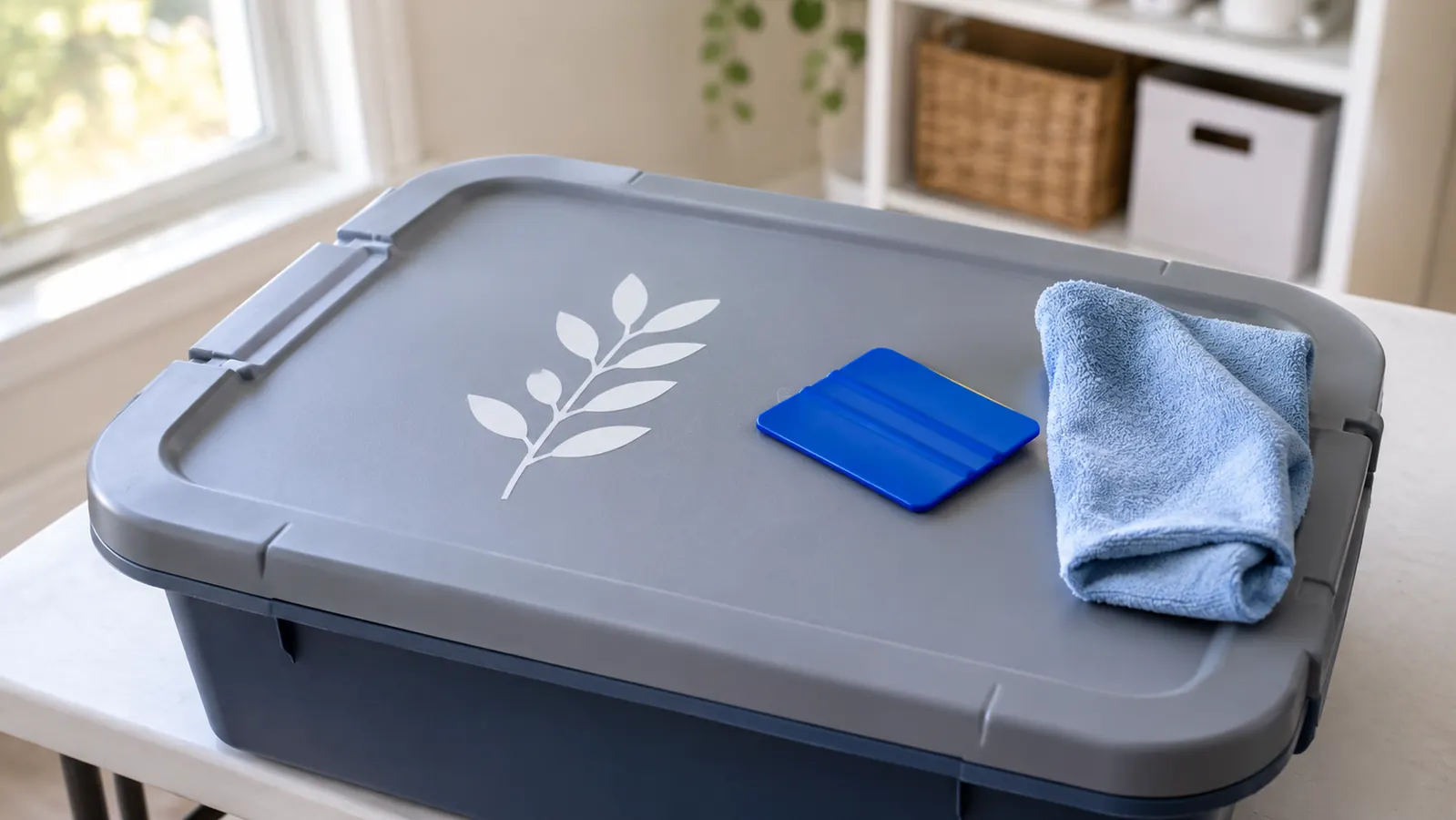
The Cut Settings Question
Every machine is a little different, and the settings on a listing are a starting point rather than a promise. My blade is rarely new, so I run a small square on a corner scrap before I commit a full sheet, whatever the package says. In January the spare bedroom runs cold, and cold vinyl behaves differently: it is stiffer off the roll and it wants an extra pass. In July it cuts like butter with the same settings. If a cut starts dragging or leaving fuzzy edges, the blade is usually the culprit, not the vinyl.
The 24 hour rule matters more than people think. Both of these are permanent adhesive, and both want a day of quiet before they meet water. I press decals down with a scraper card, working from the middle out, then I leave them alone on the closet shelf overnight. Shirts get washed after that, not before. Most of the peeling complaints I hear from friends trace back to someone rinsing a cup an hour after sticking a decal on it, and no vinyl on the market survives that.
What Neither One Fixes
Neither vinyl forgives a dirty surface. Wiping with a lint free cloth and letting it dry takes thirty seconds, and skipping it is how you end up with a corner lifting a week later. Neither one loves a textured or curved surface either. I have stuck decals on plenty of plastic tote lids and flat sign blanks with good results, and I have watched the same material fight me on a bumpy tumbler with a heavy curve. That is a shape problem, not a brand problem.
I checked the porch sample pieces after three weeks, then again after six. Both materials held their color and neither one lifted at the edge, which told me the fade resistant and waterproof lines on the Frisco Craft listing are not marketing noise. The thing that actually went wrong in that test was mine: I had stuck one decal onto a blank I wiped with a cloth that had fabric softener in it, and that corner curled inside a week. Same vinyl, same weather, different prep. If you take one thing from this comparison, make it the wipe down and the overnight wait, because those two habits matter more than which brand name is on the roll.
Both also leave you with the backing paper problem. Frisco Craft arrives as a roll, and a roll wants to curl back on itself once it is partly used, so I keep it upright on the closet shelf and weigh the loose end with a binder clip. Sheets lie flat but slide around, and Oracal sheets in particular will happily skate across the table while you are trying to line up a cut. A strip of tape on the mat solves it, and it took me two years to figure that out. Storage is boring and it is also most of the reason a roll lasts as long as it should.
Who Should Buy Which
Buy the Frisco Craft roll if your work is mostly one color and you cut in batches. Team sets, name labels, matching decals for a fundraiser, practice runs while you learn the machine: one continuous roll handles all of it, the settings are printed where you can find them, and you are not opening a fresh sheet every fifteen minutes. Buy Oracal 651 if color matching is the job, if the decal is going on a vehicle or a sign that has to survive winters, or if you cut fine script and small lettering where a tear-out ruins the piece. If you are like me, you end up with both: the white roll for volume and a small stack of Oracal sheets for everything that needs a color. That is not indecision. It is matching the material to the job instead of forcing one roll to do two jobs.
Start With the Roll That Covers the Whole Set
If most of what you cut is white, glossy and in bulk, this is the simple choice: a 12 inch by 30 foot roll, permanent adhesive, fade resistant and waterproof, with cut settings listed for both machines.
Amazon Check Today's Price on Amazon →