
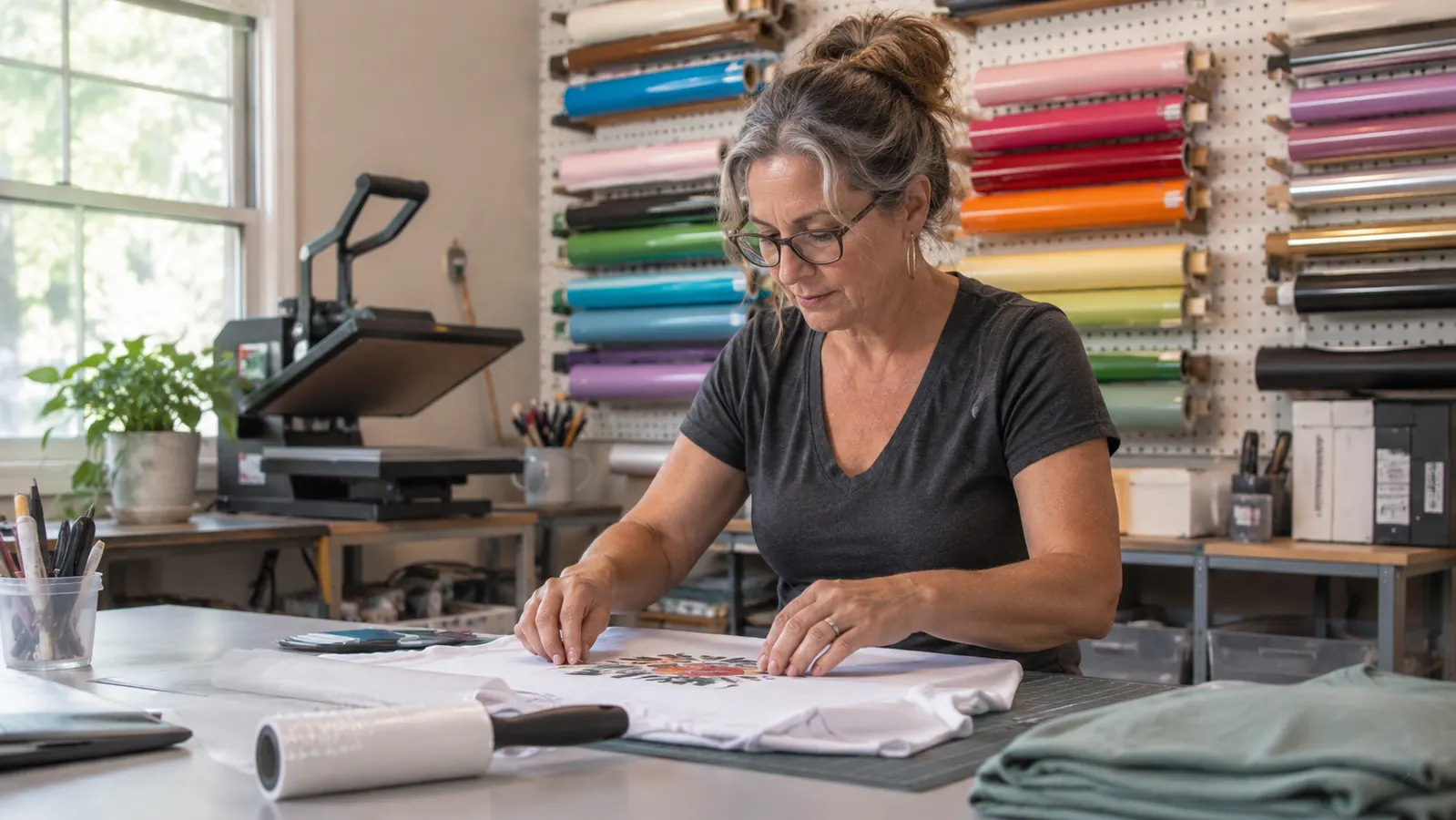
Most of my vinyl mistakes start the same way. A short roll, a long order, and me at eleven at night taping scraps together because a team needs twenty shirts by Saturday. I run a small decal and shirt table out of a converted spare bedroom in Columbus, and the thing that actually slows me down is never the design. It is running out of material halfway through a run. The HTVRONT HTV roll fixed the boring half of that problem before I ever touched the machine. It measures 12 inches wide and 8 feet long, which is 96 inches of usable material, and it hangs on the pegboard wall where I can see what is left every time I walk past.
I have been cutting heat transfer vinyl for about four years now, long enough to know that a roll is only as good as what it does under the press. This one is polyurethane, it weighs 0.22 kg, and the listing gives real numbers instead of a vibe: 300 to 320 degrees Fahrenheit, mid pressure of 5 to 8 kg, 10 to 15 seconds, then cool for one to two minutes before you peel. Those numbers are what I actually use. Here are ten reasons the HTVRONT roll stays on my wall, and one section at the end about what I would skip it for.
See the current roll sizes before your next team order
Same HTVRONT material I cut twenty jersey numbers from in one sitting. Check today's price on Amazon and confirm the width and length you need first.
Amazon Check Today's Price on Amazon →96 Inches Means You Stop Reordering Mid-Project
My granddaughter Nia plays volleyball, and her team order was twenty shirts, a number on the back and a name on the front. On a short roll that job gets frightening around shirt twelve. This roll runs 96 inches long, so I cut the whole run in one sitting and still had material left for the two shirts that always come back sized wrong. The 12 inch width covers a shirt front with room to spare.
It Cuts Clean and It Weeds Without a Fight
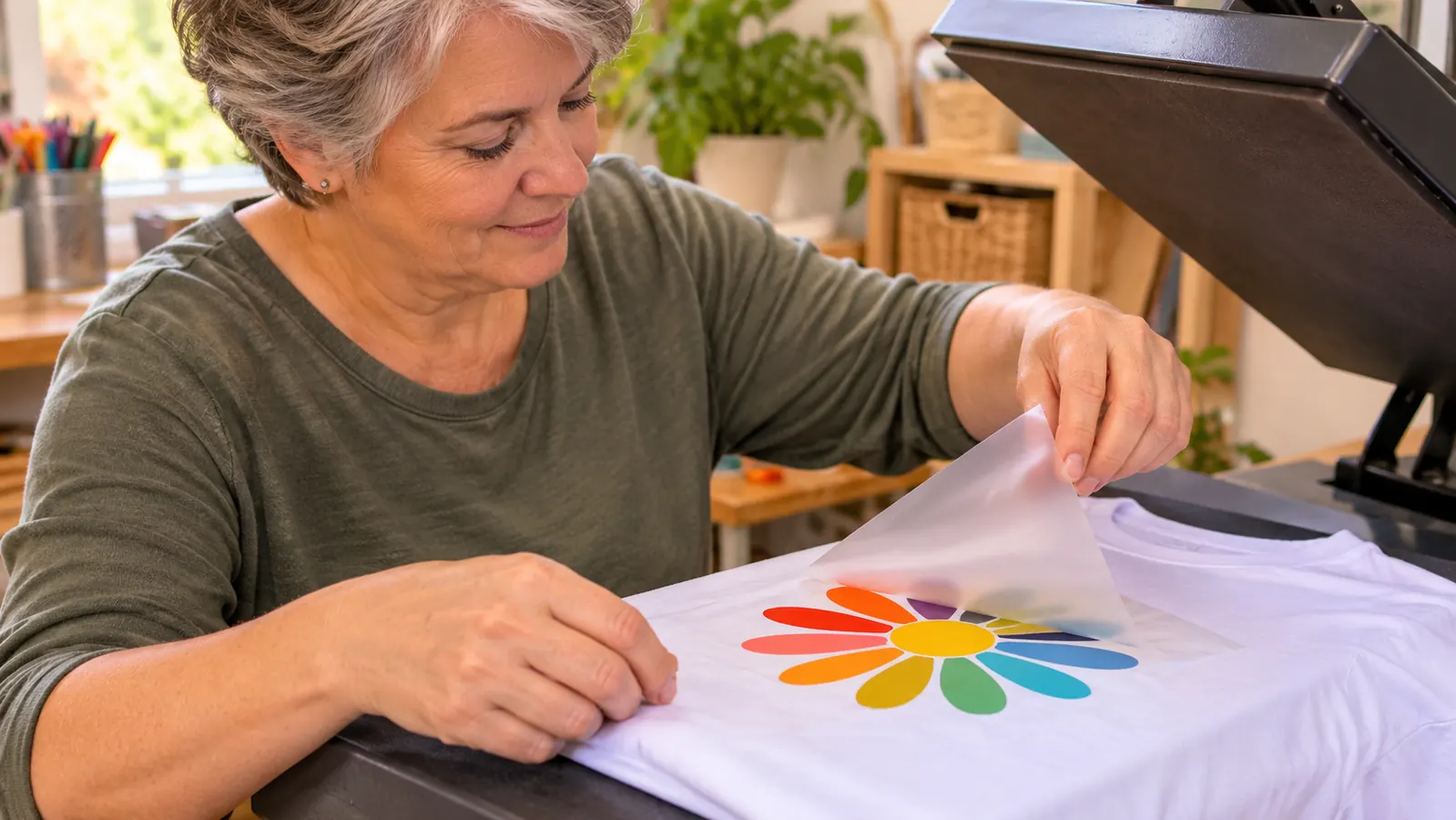
The material is polyurethane, and that matters less on the cutting mat than it does in your hands. Flimsy vinyl slides under the blade and tears at the corners of small letters. This one holds its shape through the cut and lifts off the carrier sheet in one piece. I cut a set of small jersey numbers with counters in them and lost two to bad weeding instead of my usual six.
Ten to Fifteen Seconds Is the Whole Press
The HTVRONT listing calls for 300 to 320 degrees Fahrenheit for 10 to 15 seconds at mid pressure, and that is exactly what I run. Fifteen seconds is short enough that a batch of twenty shirts does not swallow an entire afternoon. You set the press, count it out, lift, and move the next one under. No second guessing, no long hold that leaves you standing there with nothing to do.
The Pressure Range Fits the Press You Already Own
Mid pressure at 5 to 8 kg is within reach of the clamshell press most of us keep in a spare bedroom. You are not hunting for a commercial setup or a compressor. I lean on the handle until it stops, hold for the count, and lift. Ray presses shirts beside me on busy weekends and we get the same result from the same press, which is more than I can say for some material we have tried.
The Cool Peel Forgives a Rushed Hand
Let it cool for one to two minutes, then peel. If you pull while it is still hot, thin lines stretch and small text goes wavy, and there is no fixing it once the shirt has cooled. Two minutes is short enough that you can stack the next shirt on the press and use the time. This is the single step I mention first when someone at the market asks how I get clean edges.

It Bonds to the Fabrics People Actually Wear
Cotton, polyester, cotton blends, lycra and spandex, athletic mesh. That list covers school shirts, team jerseys, church fundraiser tees and the stretchy performance tops parents bring me because a store version faded. Athletic mesh is the one that surprises people, since a lot of vinyl will not hold on it at all. I would still test on a scrap of anything unfamiliar before committing a whole back panel.
Twelve Inches Covers a Front Panel Without Piecing
Piecing two cuts together to span a shirt back leaves a seam you can feel through the fabric, and it always shows after the first wash. Twelve inches wide means an ordinary adult front panel is a single cut. For a full back I use the length of the roll rather than the width, which is the other reason 8 feet matters more than it sounds on paper.
It Hangs Flat and Light on a Pegboard
The whole HTVRONT roll weighs 0.22 kg, so it hangs on a peg without dragging the hook out of the board. In a spare bedroom where the closet shelf is already full of blanks, storage is half the battle. I keep it within arm's reach of the cutter, and I can see at a glance whether I have enough left for a weekend order before I promise anyone a shirt.
Two-Layer Designs Stay Wearable
The first layer presses, cools and peels. The second goes on top of it. Because you are working with a short press and a cool peel, a two-colour design does not end up as a stiff plate across the chest. I do this for team names with an outline, and the shirts still fold and drape like a shirt instead of a sign.
Repeat Orders Behave the Same Way Twice
What keeps a market table running is that the fifth shirt and the fiftieth shirt come out the same. Same temperature, same count, same peel. When a coach comes back in October for six more, I do not have to re-learn the material or guess at the settings. That consistency is worth more to me than any single feature on the listing.
What I'd Skip
Two jobs where I would not reach for this roll. The first is anything that cannot take heat, which includes coated outdoor fabrics, some water resistant jackets and the shiny synthetic shells people ask me to decorate for a charity walk. No press setting makes that safe, so I turn those down rather than risk ruining someone's jacket. The second is a true one-off. If all you need is a single small decal for a laptop or a name on one tote bag, an 8 foot roll is more material than you will use in a year, and a small sheet makes more sense. This roll earns its place when you cut for other people, in batches, on a deadline. Also worth saying plainly: I wash everything I press inside out and let it air dry. I do that with all heat transfer vinyl, not just this one, and it is the habit that keeps my work out of the returns pile.
Ninety-six inches on the roll meant I cut twenty jersey numbers in one sitting without walking to the closet once.
If you cut for other people, buy the length that finishes the order
The HTVRONT roll is 12 inches by 8 feet, 300 to 320 degrees Fahrenheit, 10 to 15 seconds at mid pressure, cool for one to two minutes and peel. Those are the numbers I use every weekend.
Amazon Check Today's Price on Amazon →