
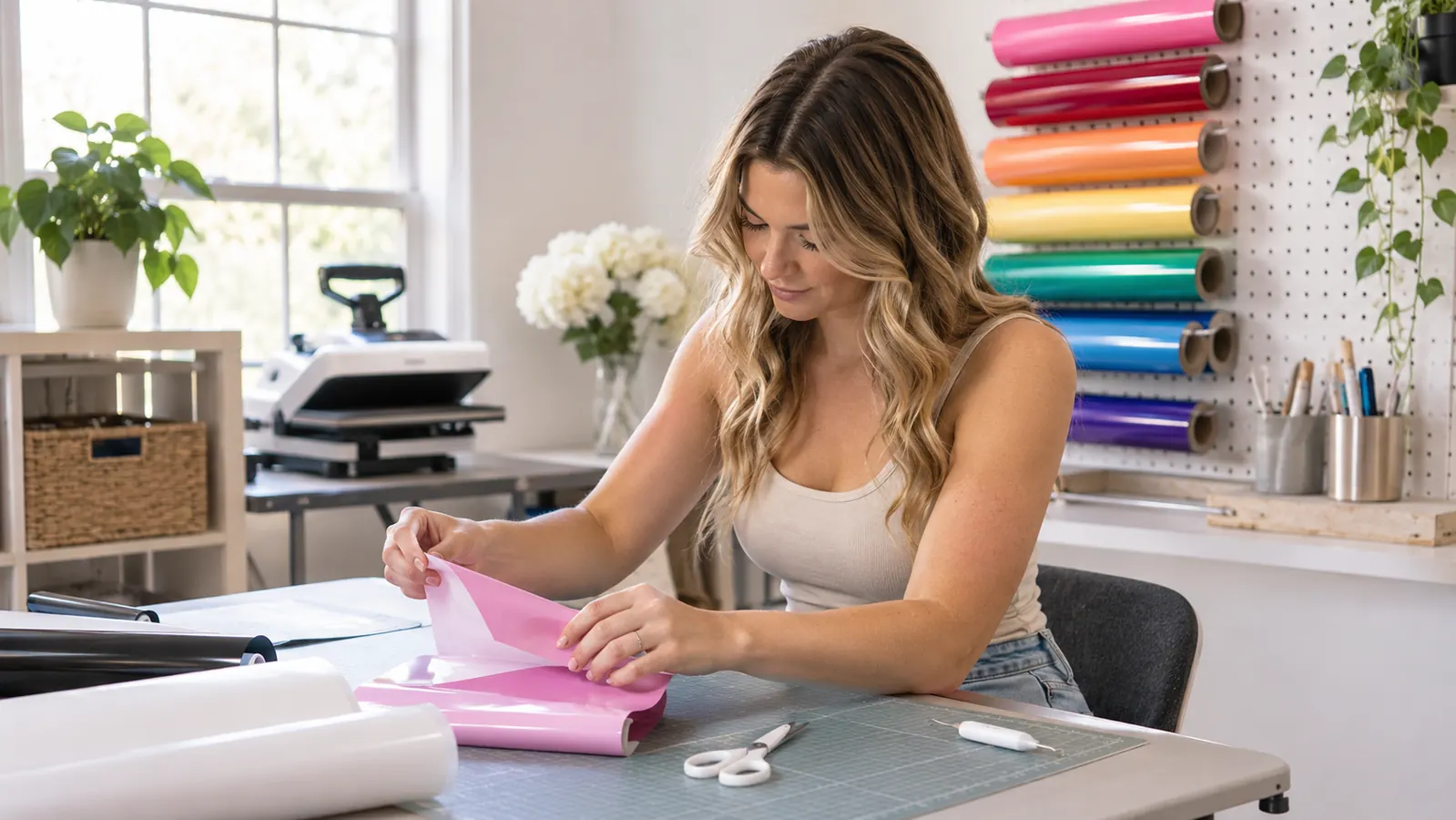
The first time I cut a long name for a team shirt, I ran out of vinyl halfway through the last letter. I had a sheet that looked generous until the design got wide. Now I keep a roll of HTVRONT HTV on the pegboard above my folding table, and that small change removed a whole category of Saturday morning panic. I cut vinyl in a spare bedroom in Columbus, Ohio, mostly shirt names for my granddaughter Nia's volleyball team, church groups, and friends who ask for one more decal. I have used both a roll and pre-cut sheets. If you are standing in your own craft room wondering which one belongs on your shelf, the short answer is that they solve different problems. The HTVRONT roll gives you length and a clear set of heat settings. Cricut Iron On gives you the Cricut name and a sheet format that some crafters already know. Neither one is the right answer for every table.
For a small setup, I would pick the HTVRONT HTV Roll if your projects repeat, if you cut names wider than a sheet, or if you want one roll to handle several shirts before you need to restock. The 12 inch by 8 foot roll is long enough that I can cut a full team set without piecing a design together. I would pick Cricut Iron On if you already follow Cricut's material settings, if you like keeping flat sheets in a folder, or if you are buying for one small project and do not want a roll taking up space. That is the honest split. The rest of this comparison is about why that split holds up at a real craft table, not just on a product page.
What the Specs Actually Say
The HTVRONT roll is listed as 12 inches wide and 8 feet long, or 96 inches by 12 inches. It weighs 0.22 kg and the material is polyurethane. Those numbers matter in a small room. A roll that long can hang from a peg or stand in a narrow bin, and it does not need a flat drawer the way sheets do. The width matches the common 12 inch cutting mat, so I do not have to trim every design down before it goes on the machine. If you cut mostly shirt names and simple shapes, that width covers most of what comes through my door. The last jersey name I cut measured nine inches across at the widest letter, and on a sheet that left a spare strip on each side too narrow to reuse for anything. That strip went in the scrap bin. On the roll, the same nine inch name comes off a length I choose, and the leftover is a clean band I can use for a sleeve number later in the week.
The heat instructions are the part I check before I press anything. HTVRONT lists 300 to 320 F, mid pressure of 5 to 8 kg, and 10 to 15 seconds. It also says to let the vinyl cool for 1 to 2 minutes before peeling. I like a product that gives me a starting window instead of a vague press until done. I still test a scrap piece on the same fabric, because a cotton tee and an athletic mesh jersey do not behave the same way. But the range gives me a place to start, and that saves me from guessing on a busy Saturday.
The fabric list is broader than I expected. HTVRONT says the vinyl works on athletic mesh, cotton, polyester, cotton blends, lycra, spandex, and other textiles. That covers the shirt types I actually see: cotton tees for church, polyester team jerseys, and the stretchy practice tops that Nia and her friends wear. I have not tried it on every fabric on that list, and I would not claim it is perfect on all of them. I do test a hidden hem before I press a full design. That habit matters more than any single setting.
The 0.22 kg weight is another small-room detail. A roll that light is easy to lift down from a peg and easy to move when I need the table for pressing. It does not pull the pegboard loose or take two hands to manage. I keep the roll in a narrow bin under the table when I am not using it, and the weight makes that practical. If you have a closet shelf instead of a pegboard, the roll can stand on end in a basket. That is not a feature the listing brags about, but it is the kind of detail that decides whether a supply stays usable or gets buried.
One thing the specs do not give is a wash cycle count or a promise about how many laundry loads a shirt will survive. I will not invent one. I tell people to follow the heat settings, let the vinyl cool for the full 1 to 2 minutes, and wash the shirt inside out. That is care, not a guarantee. The same goes for the fabric list. It is a list of suitable textiles, not a promise that every mesh jersey will take the same press. Test a hidden piece first. That advice has saved me more shirts than any single setting.
On the Cricut side, I am not going to pretend I have a lab sheet for every Cricut Iron On pack. I do not. What I can say is that Cricut sells its own iron-on materials and publishes guidance for its users. If you already trust that guidance and you like the sheet format, there is no reason to talk you out of it. The comparison is not about which brand is good. It is about which format fits a small table, a short run, and the way you already work.
Side by Side at a Glance
| HTVRONT HTV Roll | Cricut Iron On | |
|---|---|---|
| Long cuts | One continuous 12 inch by 8 foot roll lets you cut a wide name without joining pieces | You work within the sheet size and join pieces for a design wider than the sheet |
| Size listed | 12 inches wide by 8 feet long, or 96 inches by 12 inches | Sheet sizes vary by pack |
| Material | Polyurethane | Cricut's own iron-on material |
| Application heat | 300 to 320 F | Follow Cricut's settings for the material |
| Pressure | Mid pressure, 5 to 8 kg | Follow Cricut's settings for the material |
| Press time | 10 to 15 seconds | Follow Cricut's settings for the material |
| Peel timing | Cool 1 to 2 minutes, then peel | Follow Cricut's peel instruction for the material |
| Fabric range | Athletic mesh, cotton, polyester, cotton blends, lycra, spandex, and other textiles | Cricut's iron-on line has its own fabric guidance |
| Storage in a small room | A roll can hang on a peg or stand in a narrow bin | Sheets stack flat in a folder or shallow bin |
| Brand familiarity | HTVRONT is a vinyl brand many cutters know | Cricut is the name on many cutting machines |
| Best for | Repeat team sets, wide names, and several shirts from one roll | Small one-off projects and crafters who prefer sheets |
Where HTVRONT Wins
HTVRONT wins on length and repeat work. An 8 foot roll means I can cut a wide name, a row of numbers, or several small decals from one continuous piece. With sheets, I end up planning around the sheet edge, and sometimes I piece a letter or a border. Piecing is not a disaster, but it adds a seam and a second chance to misalign. For team sets, the roll is simply less fuss. I cut what I need, trim the piece, and put the roll back on the peg. The leftover is still a usable strip, not a partial sheet that is hard to store. Last September I had eleven volleyball jerseys due in one weekend, with numbers running from 2 to 24. With sheets I would have been counting how many two-digit numbers fit on a page before I cut anything. With the roll I measured one long length, cut the numbers in order, and never stopped to check whether a sheet had enough room left. Ray pressed while I cut, and we cleared the stack before lunch.
HTVRONT also wins on clear starting settings. The 300 to 320 F range, the 5 to 8 kg mid pressure, the 10 to 15 second press, and the 1 to 2 minute cool peel give me a checklist. When I am pressing shirts for a church group, I want a repeatable process. I write the settings on a sticky note, keep it by the press, and work through the stack. The polyurethane material has held up on the cotton and polyester blends I use most. I have seen edges lift when I rushed the peel, but that was my timing, not a product failure. When I followed the cool time, the edges stayed down.
Where Cricut Iron On Wins
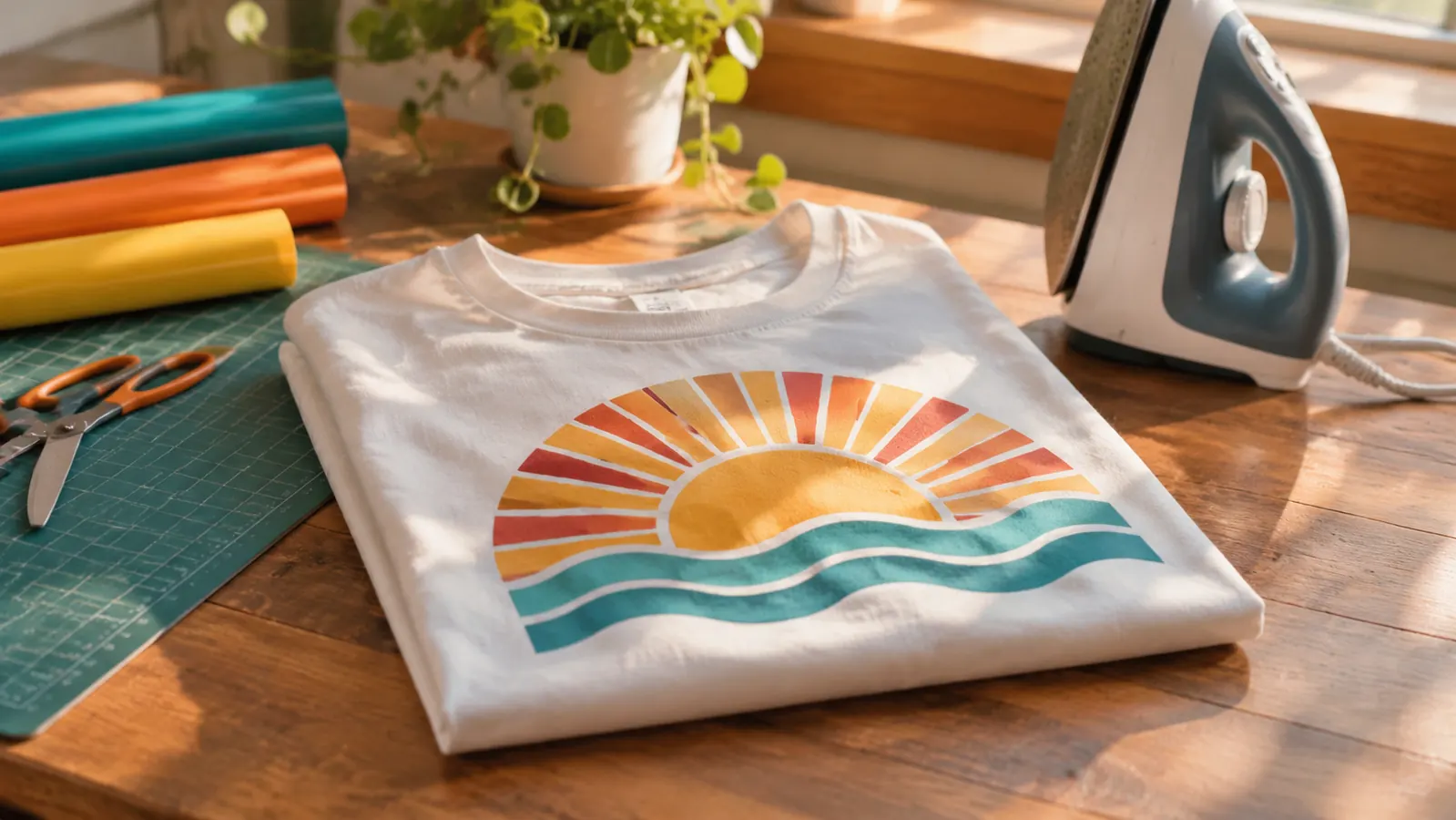
Cricut Iron On wins on familiarity for Cricut users. If your machine is a Cricut and you already read Cricut's material settings, the Cricut iron-on line fits the workflow you know. The brand is on the machine, the software, and the material, so there is less translation. For someone who does not want to compare heat charts from three different makers, that sameness has value. It is not a technical advantage in every case, but it is a real advantage in a small room where you are trying to reduce decisions.
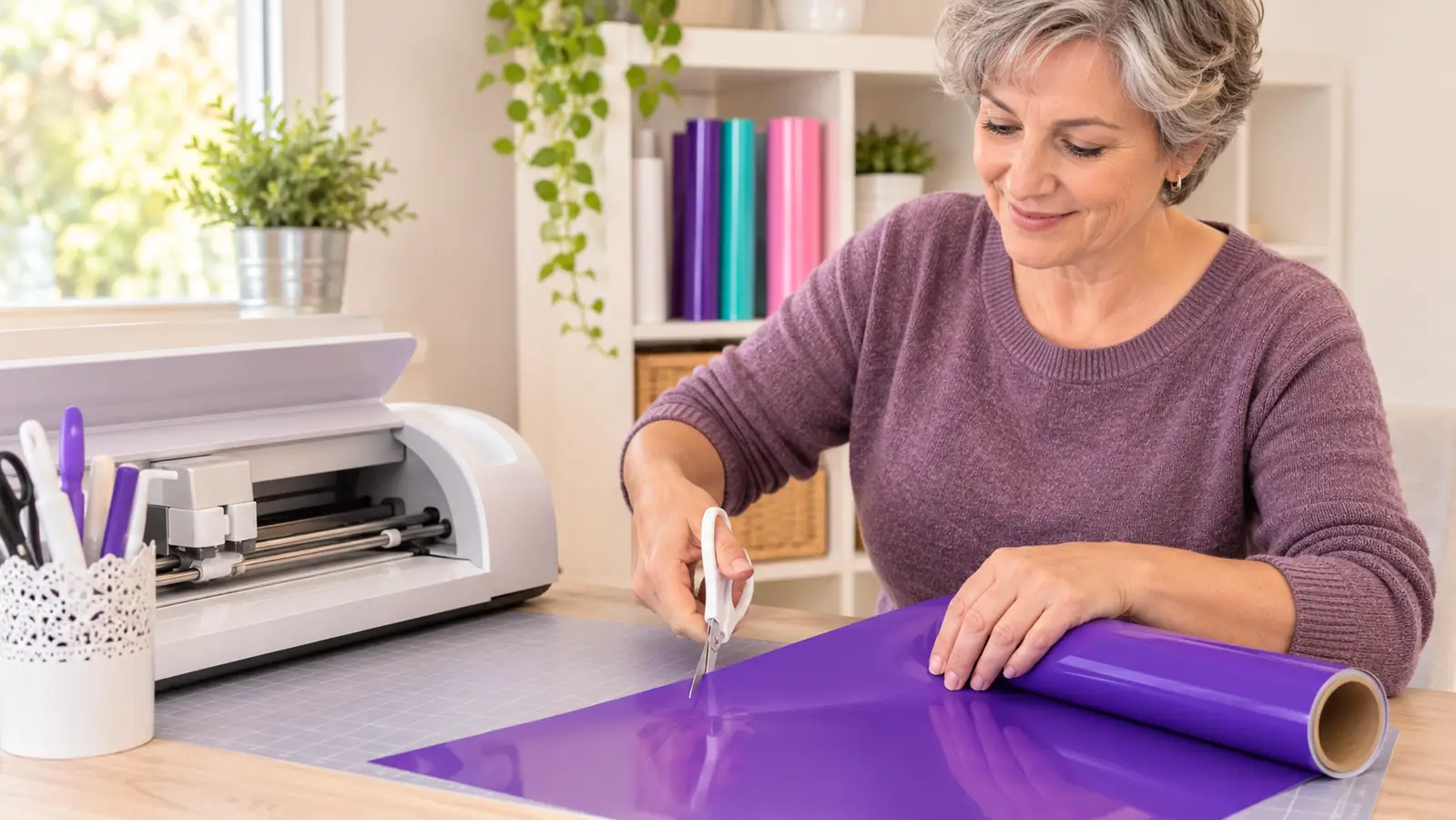
Cricut also wins on flat storage and small one-off projects. Sheets stack in a folder or a shallow bin, and they do not need a peg or a tall basket. If you make one shirt for a birthday and you do not want a roll of leftover material, sheets are easier to put away. I keep a few sheets for small jobs because they are handy when I do not want to unroll a long piece. The catch is that sheet sizes limit wide designs. You plan around the sheet, not the other way around. For a single small decal, that trade is fine. When Nia's class asked for name tags last spring, I cut twelve small tags from one sheet at the kitchen table instead of walking back to the spare room for the roll. That is the whole case for sheets, and it is a good one.
See the HTVRONT roll that keeps a team set on one piece
The 12 inch by 8 foot roll, 0.22 kg, with a clear 300 to 320 F press window. If your table runs on repeat orders, start here.
Amazon Check the HTVRONT HTV Roll on Amazon →Who Should Buy Which
Buy the HTVRONT HTV Roll if you cut the same kind of design more than once, if you make team shirts, if you need a name wider than a sheet, or if you want one roll that covers several projects. It suits a small setup because the roll stores upright or on a peg and the 12 inch width matches a standard mat. It also suits anyone who wants a written heat range and a defined press time. I would not buy it if you only make one small decal a year and you have no place to keep a roll. In that case, the leftover length is more storage problem than help.
Buy Cricut Iron On if you already use Cricut materials and you like following one brand's settings, if you prefer flat sheets in a folder, or if you are making a single small project. It is also the easier choice if someone else in the house already knows the Cricut material line. I would not buy it as a default for long names or repeat team sets unless you are willing to piece designs or buy enough sheets. That is not a knock on the quality. It is a format difference. A sheet is a bounded piece. A roll is a length you manage. Pick the format that matches how you actually work.
A practical way to decide is to measure your widest design. If it is wider than the sheets you would buy, the roll wins. If your widest design fits on a sheet and you make fewer than a handful of shirts a month, sheets are easier to store and easier to use up. I also look at my scrap bin. With a roll, my scraps are long strips that I can use for small names and borders. With sheets, my scraps are odd shapes that are harder to match. Neither is waste-free. The difference is how much usable material is left after the design is cut. For my table, the roll leaves me more usable length. My rule is simple: lay the design on the mat, measure the longest edge, add two inches for the margin. If that number comes out over eleven inches, I reach for the roll and leave the folder on the shelf.
If you are tired of piecing names from sheets, the roll is the practical fix
HTVRONT HTV Roll, 12 inches by 8 feet, polyurethane, with a 300 to 320 F starting range and a 1 to 2 minute cool peel. Measure your widest design before you buy. If it is wider than a sheet, this is the one.
Amazon Check the HTVRONT roll on Amazon →