
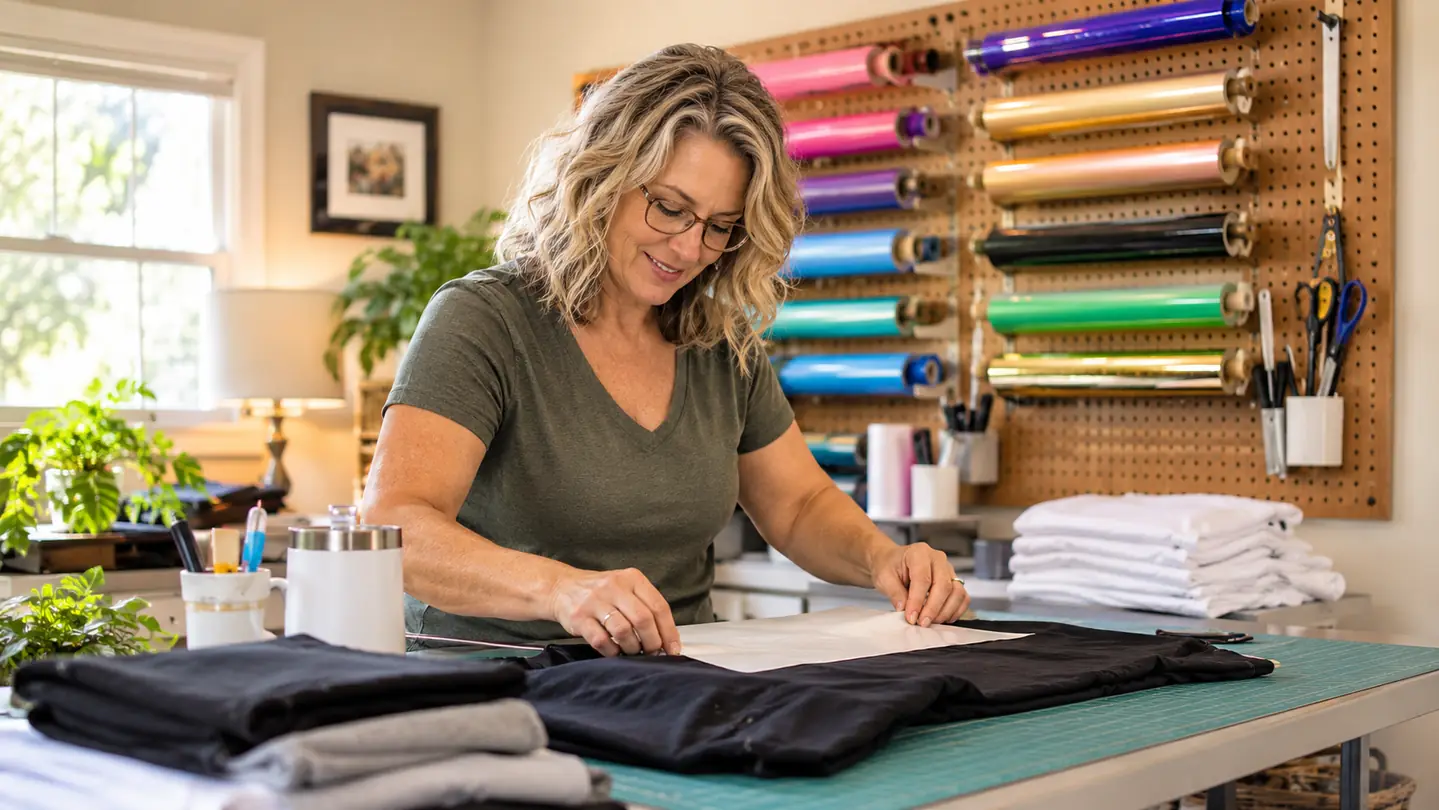
The roll sat on my pegboard for three weeks before I cut into it. I have been burned by heat transfer vinyl: sheets that curled at the edge, weeded like wet newspaper, and lifted in the wash after two cycles. I run a small decal and shirt table out of my spare bedroom in Columbus, Ohio, and I do not have room in my week to remake an order.
What pushed me to finally cut it was a jersey order for my granddaughter's volleyball team. Nia is 11, and the team needed names and numbers on the back of a mix of jerseys, some cotton blend, some athletic mesh. Jersey fabric is unforgiving that way. Press too cool and the vinyl peels at the first wash. That spread of fabric is where cheap vinyl shows itself. The HTVRONT HTV Roll is a polyurethane roll, 12 inches by 8 feet, and the listing names athletic mesh, cotton, polyester, cotton blends and lycra as fair game, which was almost exactly what sat on my folding table that week.
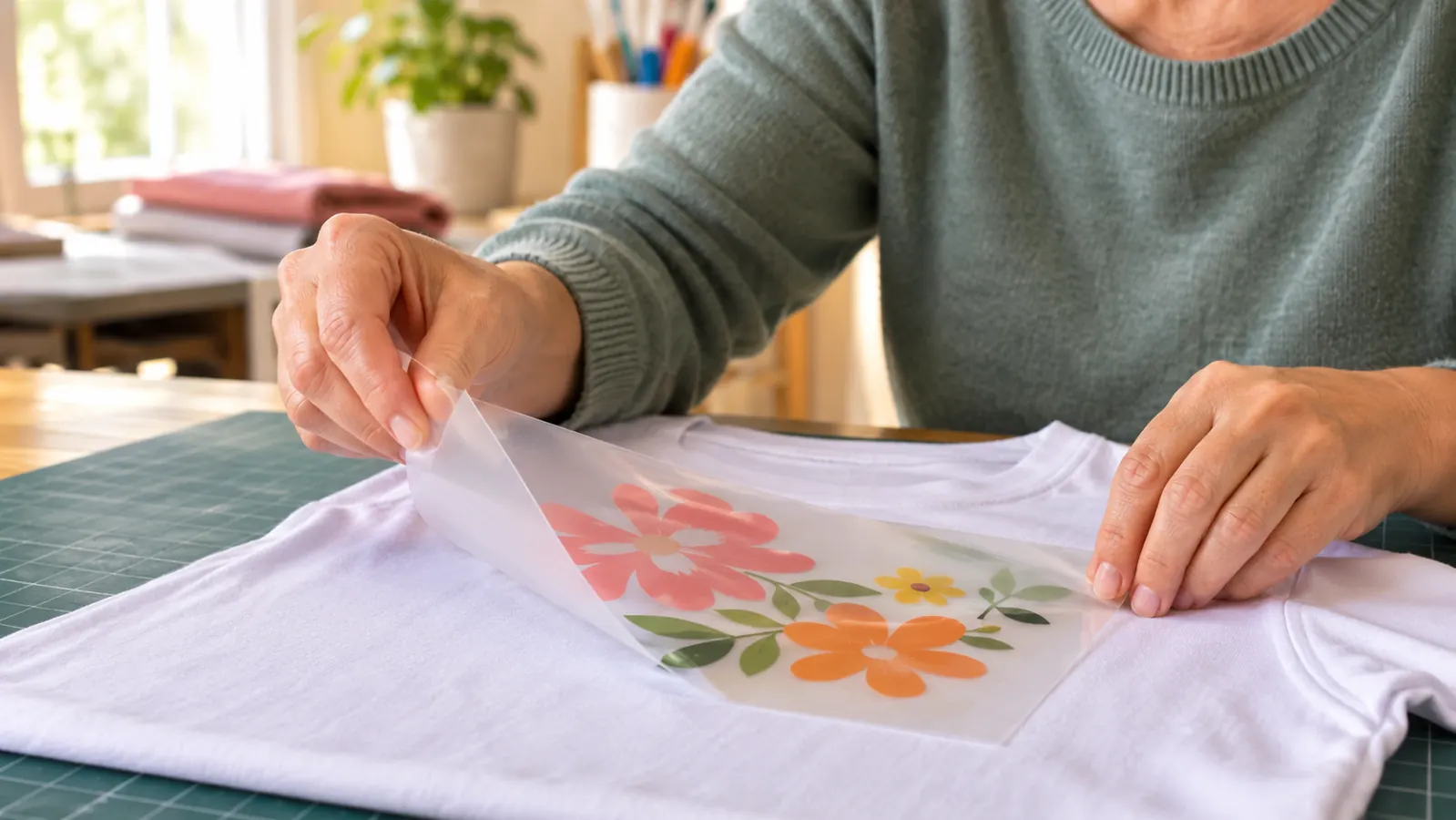
The settings are narrow and the listing says so: 300 to 320 degrees Fahrenheit, mid pressure around 5 to 8 kg, 10 to 15 seconds, then let it cool one to two minutes before you peel. I set my press to 310 and counted out loud, because I have learned not to trust my own sense of a fifteen second press.
Weeding is where I judge a roll, since weeding is where I lose an evening. This one cut cleanly on the blade and depth I use for everything else, and the small letters in Nia's name came off the backing without tearing. It was not effortless on the first try. My first pass sat at the low end of the window and one corner came up shy, still stuck to the carrier instead of the mesh. Ten degrees warmer fixed it and the rest of the run went fast.
Ray pressed the second half of the jerseys on the Saturday, using the same numbers I had written on the pegboard, and none of them needed a second pass. That is the first time I have handed him a new roll without standing over his shoulder.
Ten degrees warmer and the corner that had lifted sat down flat, and it was still flat six washes later.
One roll, one set of settings, three fabric types
Polyurethane, 12 inches by 8 feet. 300 to 320 degrees, mid pressure, 10 to 15 seconds, cool one to two minutes, then peel. That is the whole spec sheet.
Amazon Check Today's Price on Amazon →The wash test is the part I do not skip. I pressed a spare name onto a cotton tee out of my scrap bin, wore it, washed it, and washed it again. Six cycles in, there is no edge lift and no crack across the letters. I have had rolls fail that at two. I wash on warm with the rest of the laundry, no special handling, because a shirt that needs special handling is a shirt nobody wears. That gap is the difference between a shirt I hand over at the market and a shirt I quietly remake on a Tuesday night.
Where it fought me was the roll memory. Eight feet of vinyl wound tight means the last stretch wants to curl off the table, and a curling edge will catch the blade housing if you let it. I cut a two inch strip off the end, taped the loose tail flat to the table edge, and the rest behaved.
Pressure is the other honest note. Twenty degrees is not a wide window, and if your press runs hot you will find the top of it faster than you expect. This is a roll that rewards a scrap test first, not a roll you learn on a customer's shirt.
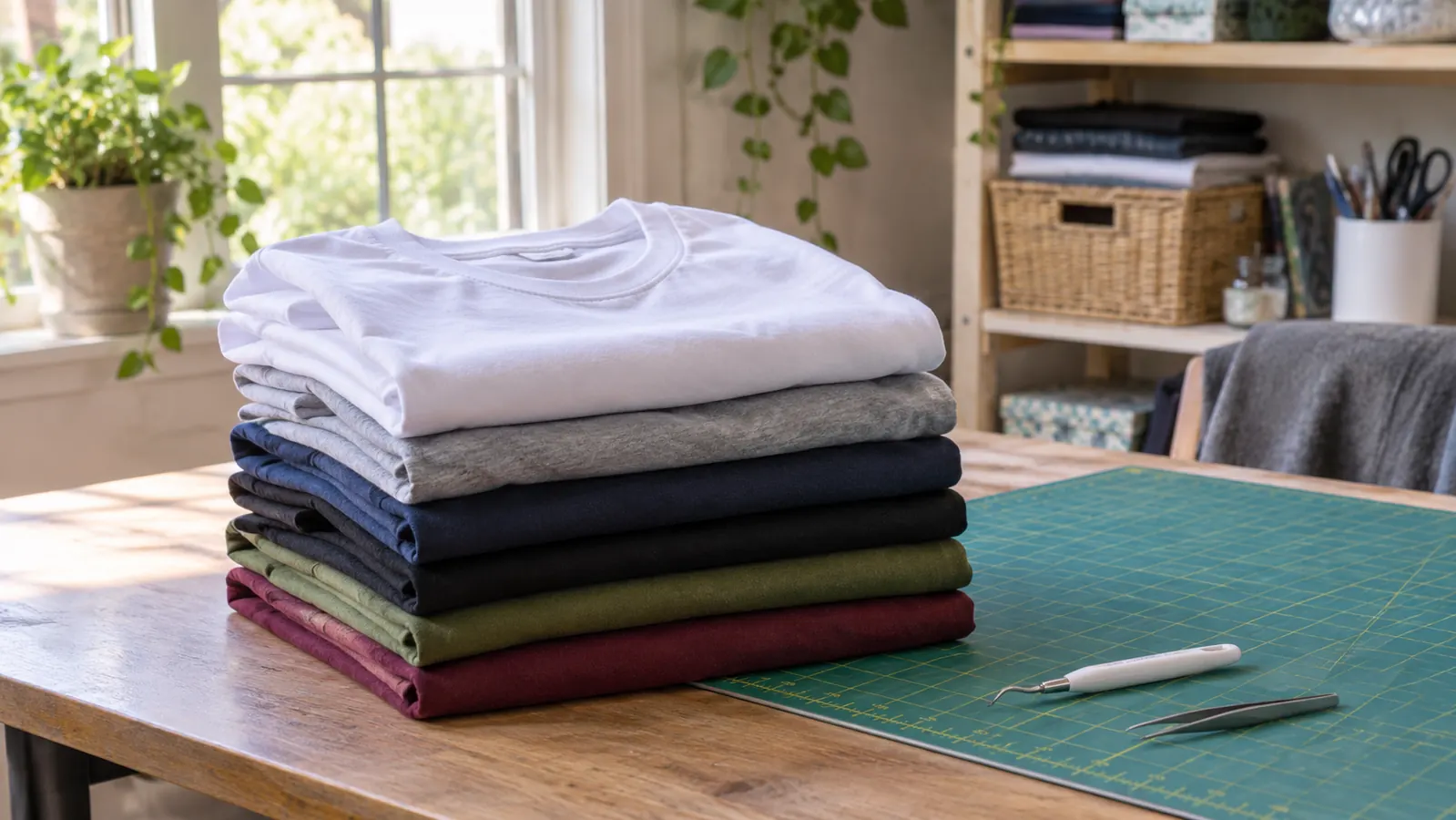
The cotton blend tees behaved like the mesh, which is the useful part. One roll, one setting, no changes between jobs. I keep a couple of sheets around for the odd one-off, but the HTVRONT roll is what stays on the pegboard now. One less thing to think about at nine at night, which is when most of my pressing happens.
The market is where a shirt gets handled. People pick it up, stretch it, fold it back down, and the fold lines sit there for six hours. Nothing I have pressed with this roll has lifted along a fold. I cannot say that about every roll in my closet.
What I'd Tell You If We Were Sitting at My Kitchen Table
I would tell you to buy the roll if your weeks look like mine: batches of shirts, mixed fabrics, a name and a number on every back, and no patience left for re-cuts. I would tell you to press a scrap first and write your own working temperature on a sticky note stuck to the pegboard, because the window is narrow and your press is not mine. I would tell you to buy the 8 foot roll rather than sheets if you are doing team orders, because the sheets run out in the middle of a name and the roll does not. And I would tell you the thing I wish someone had told me four years ago: the vinyl is not the place to save a few minutes. The HTVRONT HTV Roll is the first roll I have bought where the material stopped being the variable I had to work around.
If your last roll lifted in the wash, start here
Polyurethane, 12 inches by 8 feet, more than 41,000 ratings on Amazon. Press a scrap before you press a jersey.
Amazon See the HTVRONT HTV Roll on Amazon →