
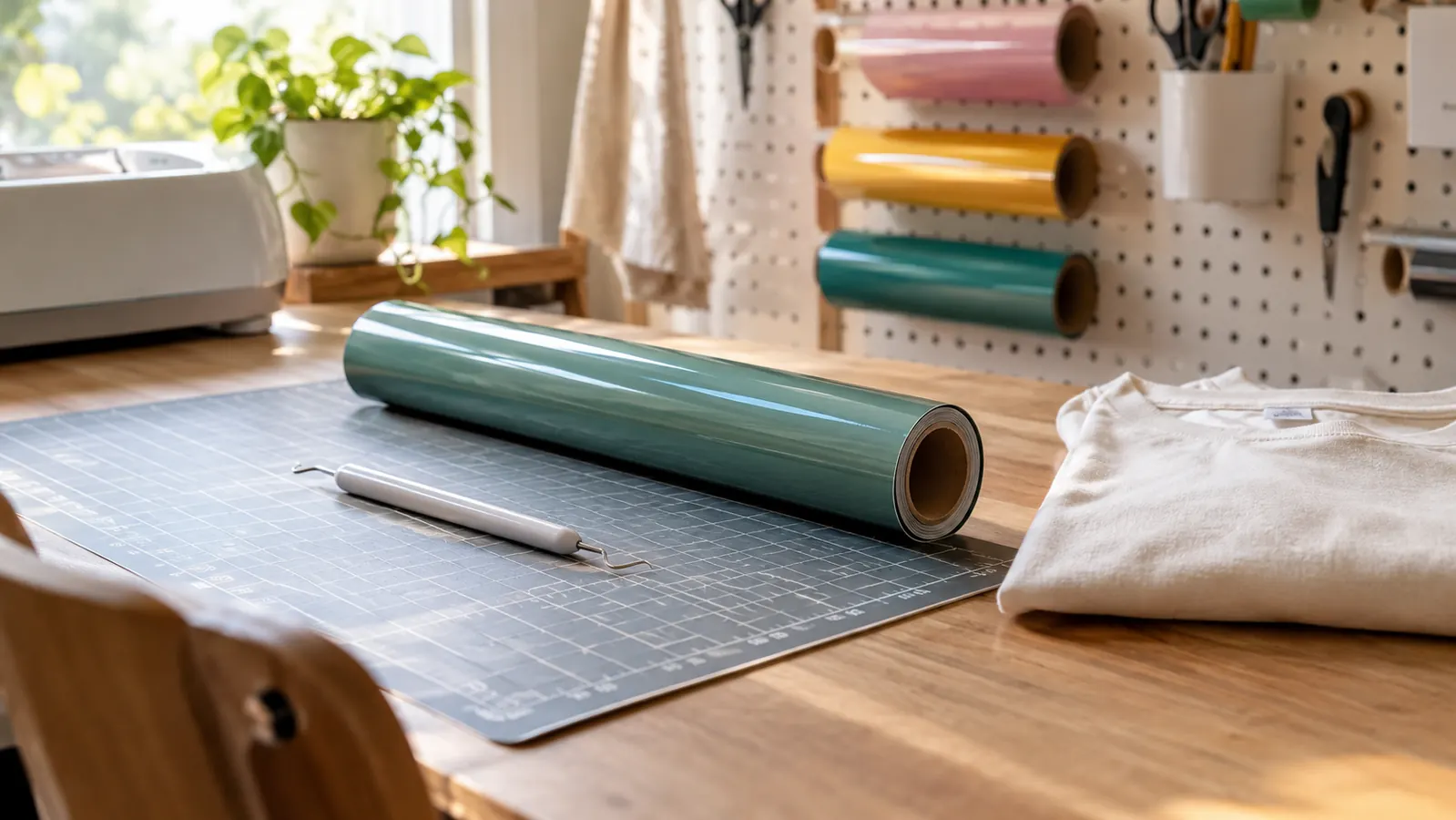
Four years of cutting vinyl teaches you where the money leaks out. It is not the machine. It is not the blanks. It is the roll that curls at the edge, fights you on the press, and takes half a design up with the carrier sheet when you peel it. I have thrown away more material in one bad week than I care to admit, and every single time it came down to the vinyl, not the cutter.
So when I say the HTVRONT HTV roll is the one that stays on my pegboard, that is not a small thing. It is a 12 inch by 8 foot roll of polyurethane heat transfer vinyl, and it does the two jobs a roll actually has to do. It cuts clean on the machine and it releases clean off the carrier. Everything else about it is unremarkable, and I mean that as praise. The boring tools are the ones you stop thinking about, and not thinking about the vinyl is how you get through a Saturday market order without a meltdown at nine at night.
The Quick Verdict
Cuts clean and weeds without drama, and it peels properly after a cool-down. Not the softest hand feel on big solid prints, and it will punish you for guessing at pressure, but it is the roll I trust with a forty shirt order.
Amazon Check Today's Price →The roll I keep re-buying for team shirt orders
12 inches wide, 8 feet long, pressed at 300 to 320 F for 10 to 15 seconds and peeled after a 1 to 2 minute cool-down. Check the current listing before you build a whole order around one roll.
Amazon Check Today's Price on Amazon →How I've Used It
My setup is one long folding table in the converted spare bedroom, a pegboard wall for rolls, and a closet shelf for blanks. I cut on a desktop cutter, weed at the table with a hook and a lamp behind me, and press on a heat press that Ray runs on the busy weekends. Four years in, most of what I make is shirts for other people. Nia's volleyball team, a church fundraiser every spring, and a handful of small orders that come through friends of friends.
The first length of HTVRONT I bought was for a set of practice shirts, the kind you make in a hurry and quietly expect to replace by midseason. Those got worn twice a week for a full season and washed in between, and the numbers are still on them. That is the test I care about. Not the first press. The fifteenth wash. I have since run the same roll through canvas tote bags, a set of polyester team warmups, and a stack of cotton tees for the market table.
The volleyball season runs from late August into October, and the first year Nia came home with a roster I made twelve shirts in one evening. Twelve fronts, twelve numbers, each one weeded by hand at the table with a lamp over my shoulder. I laid them out on the mat four at a time so the roll would not wander off the edge, and every one of those twelve pressed and peeled without a single letter lifting. When you are making twelve of something, a material that behaves the same on the twelfth shirt as it did on the first is worth more than any line on the listing.
What I noticed early is that it cuts without dragging. Thin film tends to lift under the blade on tight curves, and you end up with a design that looks chewed along the edges. This one stays flat on the mat, which means small lettering and fine outlines come off the machine usable the first time. If you make anything with a jersey number and a name plate, that single behaviour matters more than every spec on the listing.
What You Actually Get on the Roll
The roll measures 12 inches wide and 8 feet long, which the listing gives as 96 inches long by 12 inches wide. It weighs about 0.22 kg and the material is polyurethane. That is a thinner, more flexible film than the stiff PVC I started out on, and you feel the difference on a curved seam or a sleeve.
Eight feet sounds generous until you lay out a team order. A full back number plus a name still eats a real chunk of a roll, and I have learned to sketch my layout on paper before the blade goes anywhere near the vinyl. I would rather spend four minutes drawing than leave six inches of waste at the end of every job. The width is the part that earns its keep. Twelve inches covers most front chest prints and full back numbers in one pass, which saves a reload and a second alignment.
I lay a back number out at roughly ten inches tall and a name plate at two inches, which leaves a comfortable margin on either side of the twelve inch width. Doing that arithmetic on paper before I cut has saved me more material than any other single habit in this room.
How It Presses: Heat, Pressure and Time
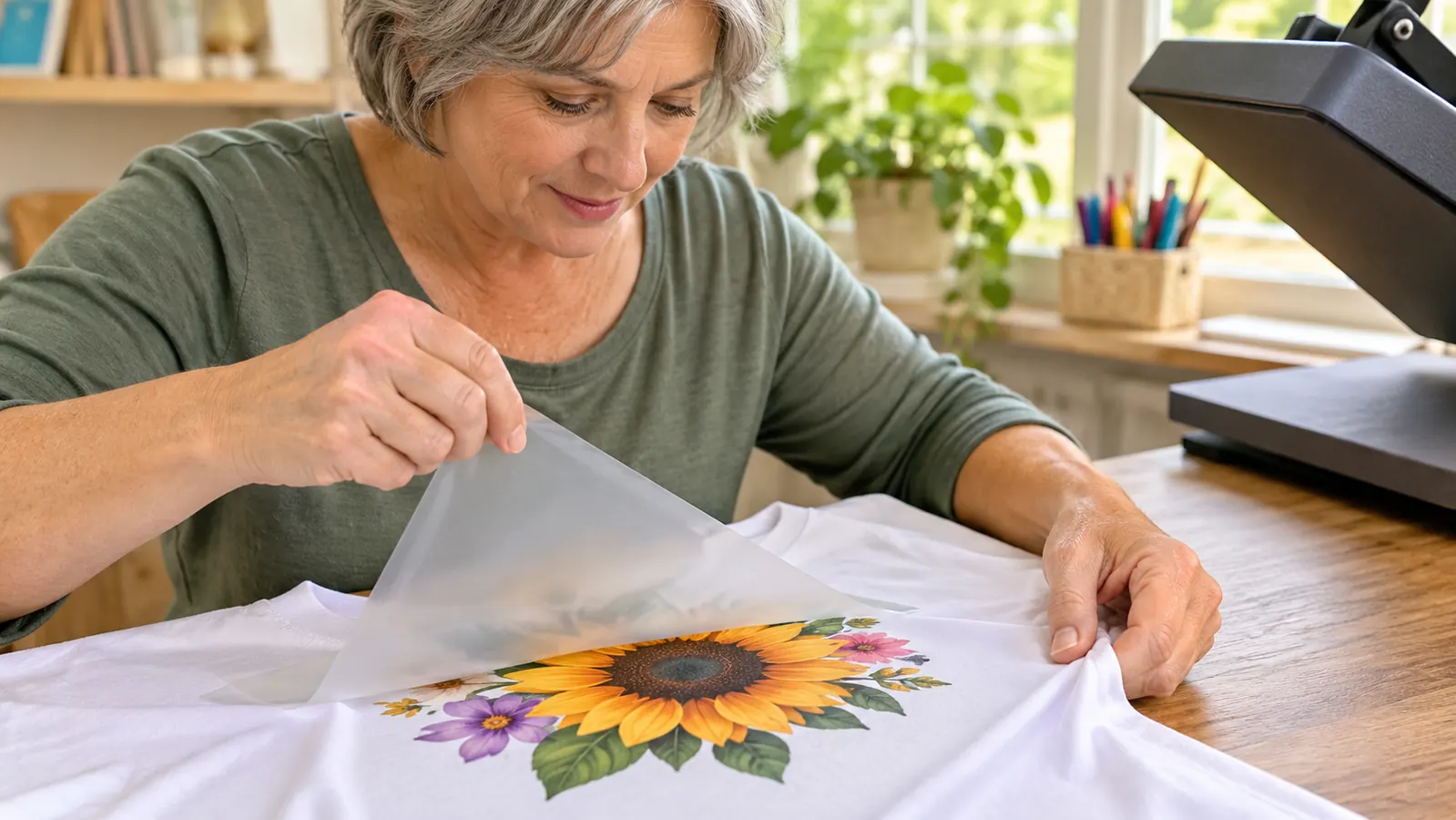
HTVRONT gives the window as 300 to 320 F, mid pressure of 5 to 8 kg, and 10 to 15 seconds, then cool for 1 to 2 minutes before you peel. I run 310 F, count to twelve, and let the shirt sit while I set up the next one. That is the whole method and it has not failed me on cotton yet.
The cool peel is the step people skip and then blame the vinyl for. Peel hot and the adhesive is still soft, so the edges of small letters stretch or lift and the whole design looks tired before it has been worn once. Set a timer. Walk away. Do something else for two minutes. I stack pressed shirts on the far end of the table and peel them in a batch, which is slower per shirt on paper and much faster in reality because I am not re-pressing lifted letters.
I learned the cool-down the hard way. My first proper order of team shirts got peeled warm because I was rushing to clear the table before Ray needed it, and by the second wash the corners of six numbers had curled up. I re-pressed all six and two of them lifted again a week later. That is the thing about a warm peel. You can sometimes stick it back down, but the adhesive has already been compromised and it will tell you eventually. Now the timer sits on the table beside the press and it does not get argued with.
Pressure is where a home setup gets fuzzy. The 5 to 8 kg figure assumes a press that applies even force across the platen. With a hand iron you are guessing, and this film will tell on you within three washes. Light pressure gives you a design that looks fine on the table and starts lifting at one corner after the first laundry day. Honestly, if you are choosing where to spend, spend on the press before you spend on a fancier roll. Good vinyl under a bad iron is still a bad result.
Where It Gives Me Trouble
Two things, and I want to be straight about both. First, hand feel. Polyurethane is softer than PVC, but a large solid block of this on a cotton tee still feels like a block on a cotton tee. For a jersey number, that is exactly what you want. For a big chest print on a shirt someone wears against their skin all day, I cut lighter coverage, use fewer solid shapes, and let the fabric show through.
Second, the roll itself. It comes wound tight, and if you store it standing on end the last foot or so develops a curl that is mildly annoying to flatten. I hang mine on a peg through the core and it stays flat. Leave it in a hot car or on a shelf in full sun and it will not press the same way, and that is true of every heat transfer vinyl I have used. This one is flexible enough that the curl matters more than it would on a stiffer film.
Fabrics It Handles, and the Ones I Test First
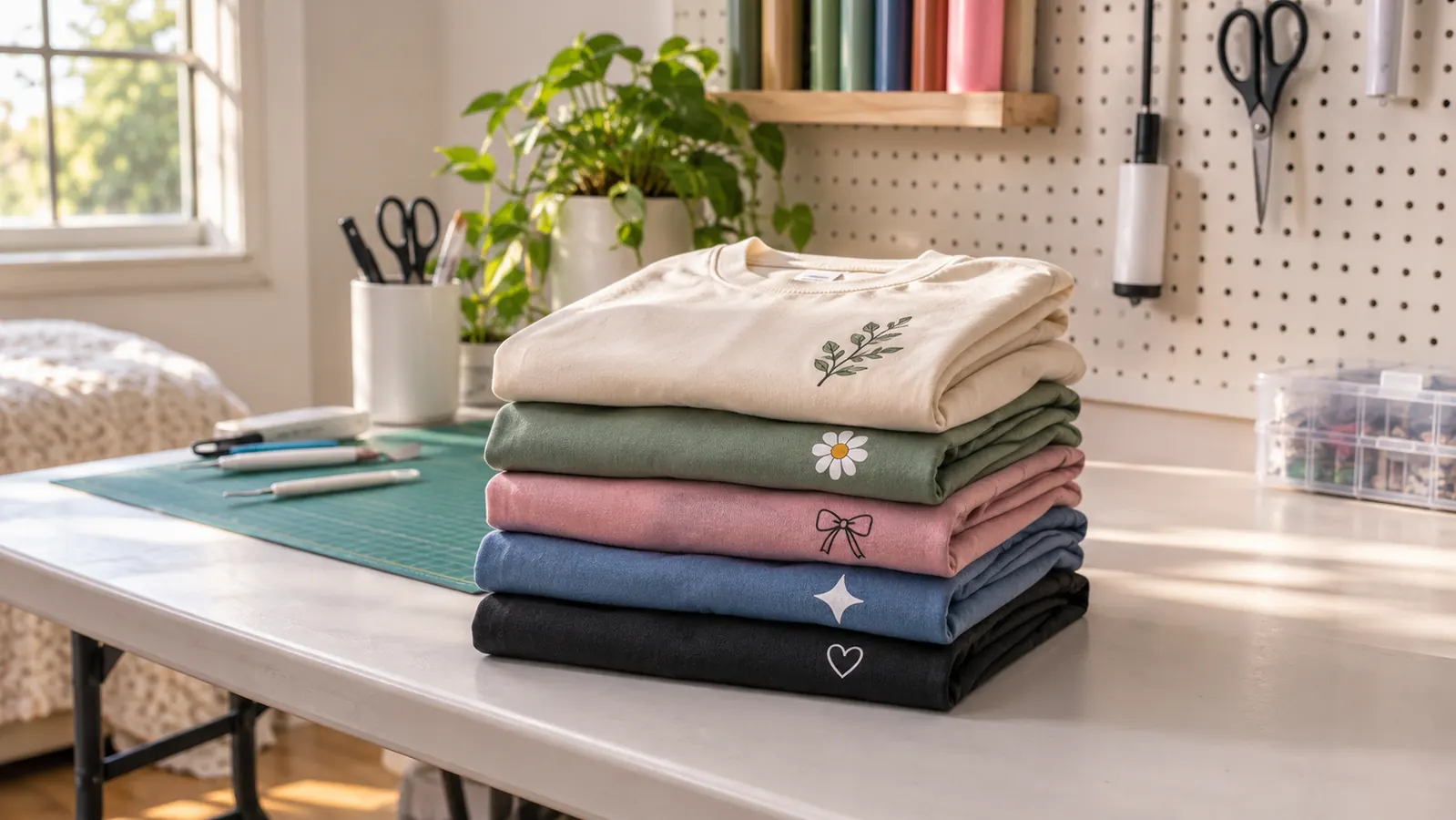
The listing covers athletic mesh, cotton, polyester, cotton blends, lycra and spandex, and general textiles. I have run it on cotton tees, a 50/50 blend, a polyester warmup, and cotton canvas totes. The blend and the straight cotton were the easiest by a wide margin. Polyester wanted a slightly lower temperature and a press cloth, because polyester and high heat do not get along and you will see the shine before you see the failure.
The warmups were the order that taught me about press cloths. Nine pieces, a lightweight poly blend with a sheen on it, and I pressed the first one at my usual cotton setting because I was confident and in a hurry. The shine came up around the collar before I had finished the second sleeve. I dropped the temperature a notch, laid a plain cotton pressing cloth over the design, and the remaining eight came out clean. If a garment has any sheen to it, treat that sheen as a warning and test on an inside hem first.
The one I always test before committing is anything stretchy. Spandex and lycra move under the press, and any film will crack if the garment stretches further than the vinyl can follow. I press a scrap onto the inside hem of one garment from the batch and wash it before I run the full order. If someone is buying a compression shirt, I say so up front rather than finding out after they have paid. That is not a knock on this roll. It is a limit of heat transfer vinyl in general.
The first press tells you almost nothing. The fifteenth wash tells you everything, and this roll passed that test on practice shirts that got worn twice a week for an entire season.
Storage, Waste and the Eight Foot Question
I buy the 8 foot roll because it fits the pegboard and because I cut many of the same shapes over and over. If you make one shirt a month, an 8 foot length is more material than you will use before it starts to age. Vinyl does not spoil overnight, but it does pick up dust, and a dusty carrier releases badly. That is the whole reason a roll that has been hanging for eight months suddenly fights you.
My rule is one roll per colour that I genuinely use, hung on a peg, with the end taped so it does not unroll itself overnight. I keep a scrap bin for test presses and small lettering, and I work through the scraps before I cut into a fresh length. That habit has saved me more material than any clever layout trick, and it means my test press costs nothing.
I keep a notebook page taped inside the closet door with the settings I have settled on for each material, and the HTVRONT line reads 310 F, twelve seconds, mid pressure, cool peel, press cloth for poly. It sounds fussy. It is the difference between a Saturday that runs smoothly and one where I am re-pressing a shirt while somebody waits on the porch. The other page in that notebook is a running list of designs I have already cut, so I do not open a fresh length for something I made three weeks ago and could pull from the scrap bin.
If you are working in a small space like mine, the roll format beats sheets in a way that is easy to underestimate. Sheets get bent, stacked, buried, and lost behind the blanks. A roll hangs, stays flat, and you can see at a glance how much is left before you promise a customer a set of twelve.
What I Liked
- Cuts clean on tight curves and small lettering without lifting under the blade
- Carrier releases properly when you follow the 1 to 2 minute cool-down
- Survived a full season of twice-weekly wear and washing on practice shirts
- 12 inch width handles a full back number in one pass
- Works across cotton, blends and polyester with a press cloth
Where It Falls Short
- Large solid prints still feel like a block against the skin
- Will lift at the corner if you guess at pressure with a hand iron
- Roll arrives wound tight and curls at the end if stored standing up
- Polyester needs a lower temperature and a press cloth, so it is not a set-and-forget material
Who This Is For
This is for the person making repeat shirts. Team orders, family reunion shirts, a market table, a small run for a school group. It is also for anyone who has been fighting a roll that drags under the blade or lifts at the corner, because a clean cut and a clean peel remove most of the daily frustration in this craft. If you press on a real heat press and you can commit to a cool peel, the HTVRONT roll will do its job without needing supervision.
Who Should Skip It
Skip it if you need one shirt and you are working with a hand iron on the kitchen table. The temperature and pressure window is narrow enough that an iron will make you believe the vinyl is faulty when the application is the problem. Skip it if you need a soft hand feel on large solid prints, or if the colour you want is not offered in the roll size. And if your blade is dull, replace it first. No roll on the market weeds cleanly through a blade that is past its time. For a single costume piece, a sheet makes more sense than a roll you will hang for a year.
If your last roll lifted at the corner, start here
12 inches by 8 feet, 300 to 320 F, 10 to 15 seconds, mid pressure, then peel after a short cool-down. Check the current listing for the size and colour you need before you plan the whole order around it.
Amazon Check Today's Price on Amazon →