
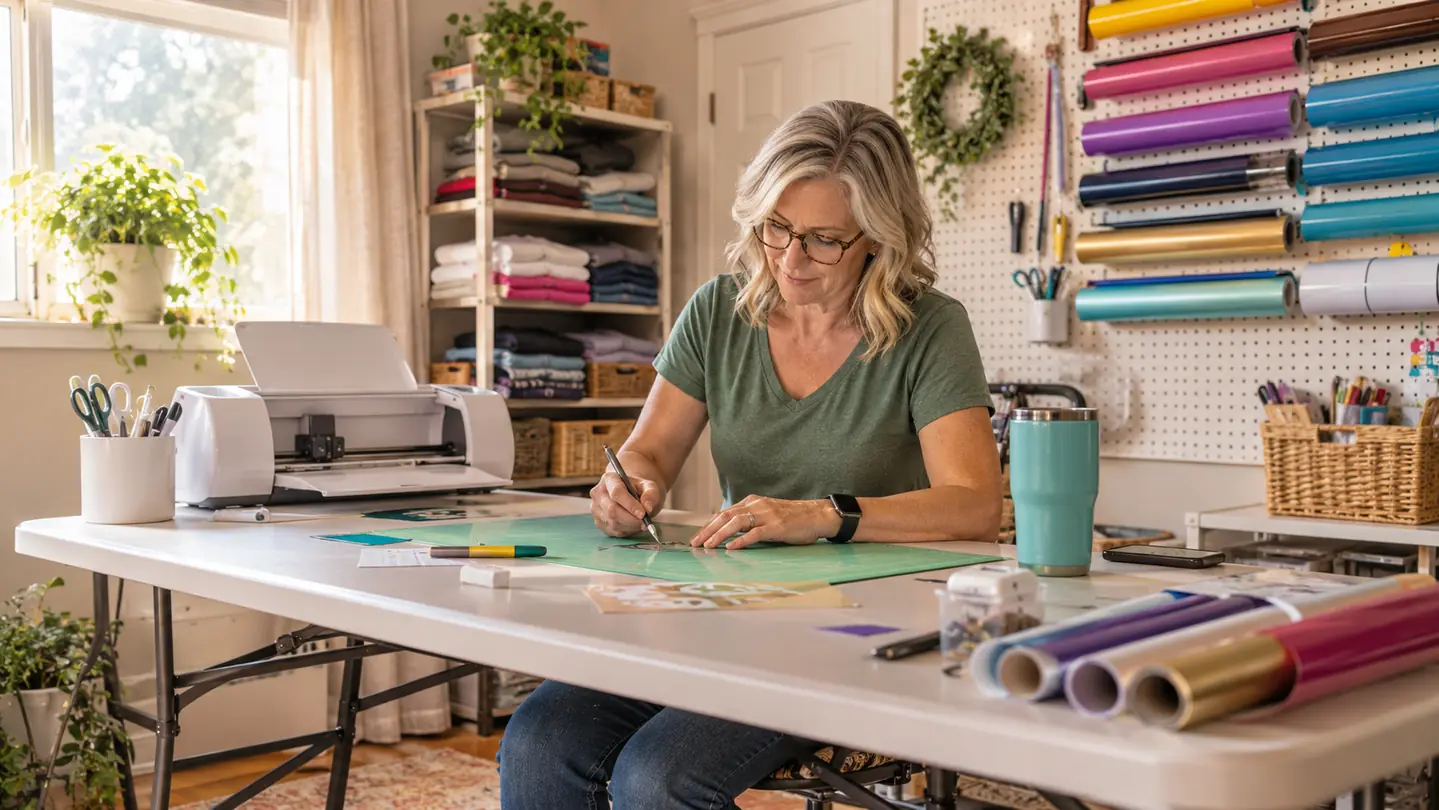
My craft table is a folding table in what used to be a spare bedroom. The vinyl rolls hang on a pegboard wall behind it and the blanks live on a closet shelf. For the first two years I worked with a machine that handled vinyl and card stock and not much else, so the middle of that table was mostly where I set things down while I explained to somebody that no, I could not make that.
The nos added up. A neighbor wanted leather keychains for her husband's birthday. A woman at the Saturday market asked for wooden gift tags with names cut out of them. Nia's volleyball team needed shirts, which I could do, and then one of the girls asked for a bag tag cut from something sturdier than vinyl. Saying no to an eleven-year-old is its own low point.
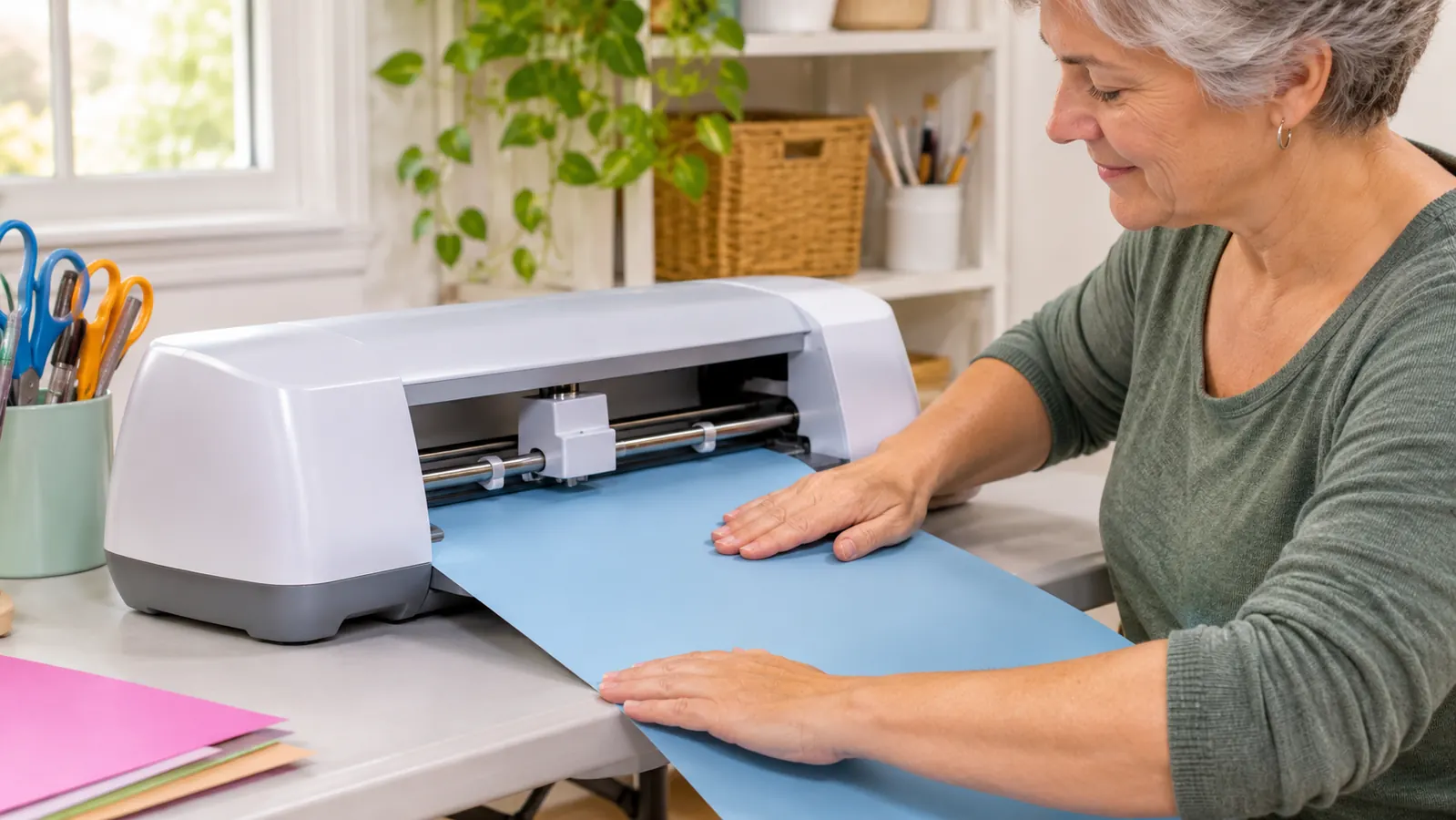
The Cricut Maker 4 replaced that machine in the middle of a busy month, which is not when I would recommend making a change. The short version is that it works with more than 300 materials, leather, wood, vinyl and iron-on heat transfer among them, so the nos went away one at a time. The longer version is what that looks like on a Tuesday night, with Ray pressing shirts on the far end of the table and me trying to finish a cut before bed.
The Cricut bundle came with the fine-point blade and a materials sampler: Smart Vinyl, Matless Vinyl, Smart Iron-On and matless heat transfer. The matless part matters more than it sounds. My old routine was to load a sticky mat, line the material up on it and hope it held through a long cut. Matless material feeds straight through the machine, so a run of shirt vinyl for the team does not turn into ten minutes of re-sticking a mat that has quit holding.
The first real project was Nia's team shirts. The Cricut handled the cutting cleanly and without complaint. The weeding was the slow part, and weeding is always the slow part. A machine that cuts beautifully still leaves you at the table with a hook tool, peeling tiny islands out of letters, for as long as it takes.
The shirts came off the machine clean and I never re-stuck a mat once. That was the night I stopped missing the old setup.
The materials I used to say no to are the whole reason to own it
Cricut Maker 4 cuts leather, wood, vinyl and iron-on with the included fine-point blade. Today's price and the full material list are on the Amazon listing.
Amazon Check Today's Price on Amazon →The leather keychains were the test I actually cared about. Leather is thicker and less forgiving than anything I had cut before, and I cut one small test shape first because I had learned that lesson already. It went through. I made six keychains that afternoon and handed the neighbor five of them, and she has asked me for two more since. That is the whole difference between the old machine and this one, in one small project.
Everything you cut goes through Design Space, the free Cricut app that talks to the machine. The content library has 3,000+ images and 100+ fonts, which covers most of what moves at a Saturday market: a name, a shape, a decent font, done. It is not a drawing program. If you want to build a design from nothing, you will do that elsewhere and bring the file in. What it does well is layout, resizing and sending the job.
The feature I did not expect to use is Print-Then-Cut. It works with an inkjet printer, so you print a full-color sheet of card stock or labels and the machine cuts around the artwork. I use it for sticker sheets on the market table and for labels on the boxes I hand out at church. It is the closest thing here to a second machine without buying a second machine.
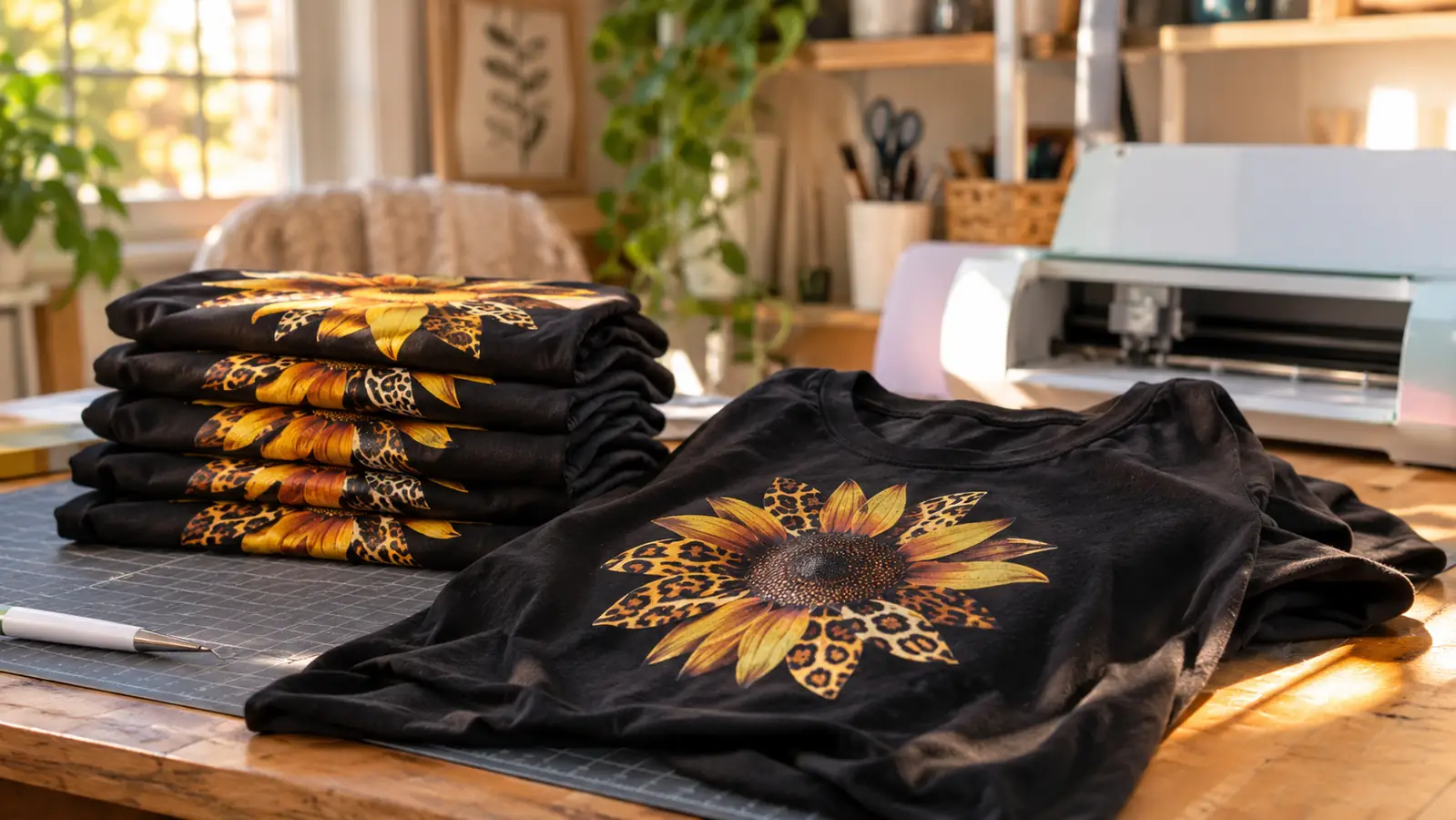
Plan for the footprint. It is 22.1 inches wide, 7.1 inches deep and 6.2 inches high, with 270.25 square inches of active surface, and you want clear room behind it for material to feed through. On a folding table that is a real strip of real estate. Mine lives at the end nearest the pegboard and everything else moved down.
Ray has no patience for machinery and noticed within a week that this one does not wander. The line stays where the file says it is, which sounds like the minimum and is not. My old machine drifted on long cuts and I had to check every shirt before it went under the press.
The settings are the part nobody mentions. Every material cuts at its own setting, and the first time you run something new you should cut a small test shape before you commit a whole sheet. I learned that one with a sheet of iron-on that came out scored instead of cut. What it does not do is weed for you, and it does not design for you. Those are still your evenings.
What I'd Tell You If We Were Sitting at My Kitchen Table
I would tell you to buy it for the materials you cannot cut now, not for the ones you already can. If everything you make is vinyl and card stock, a simpler machine does that job and takes up less of the table. If you keep turning down work because the material is too thick, too stiff or not paper, the Cricut Maker 4 is the machine that ends that conversation.
I would also tell you to start with one project you already know how to make and cut it on the new machine before you try anything ambitious. Learn where the blade loads, learn what the matless material feels like going in, and get one clean result. Then go get a piece of leather and make the keychains. The rest of the learning is easier after you have one thing that worked.
And I would tell you the table does not get less crowded. It gets busier, and the pile of blanks on the closet shelf grows, and you start keeping a running list of things people asked for. That is the point. The machine is not the interesting part. The list is.
If there is a list of nos sitting on your table, start there
300+ materials, a fine-point blade in the box, and a free content library with 3,000+ images and 100+ fonts. Current price is on the listing.
Amazon Check Today's Price on Amazon →