
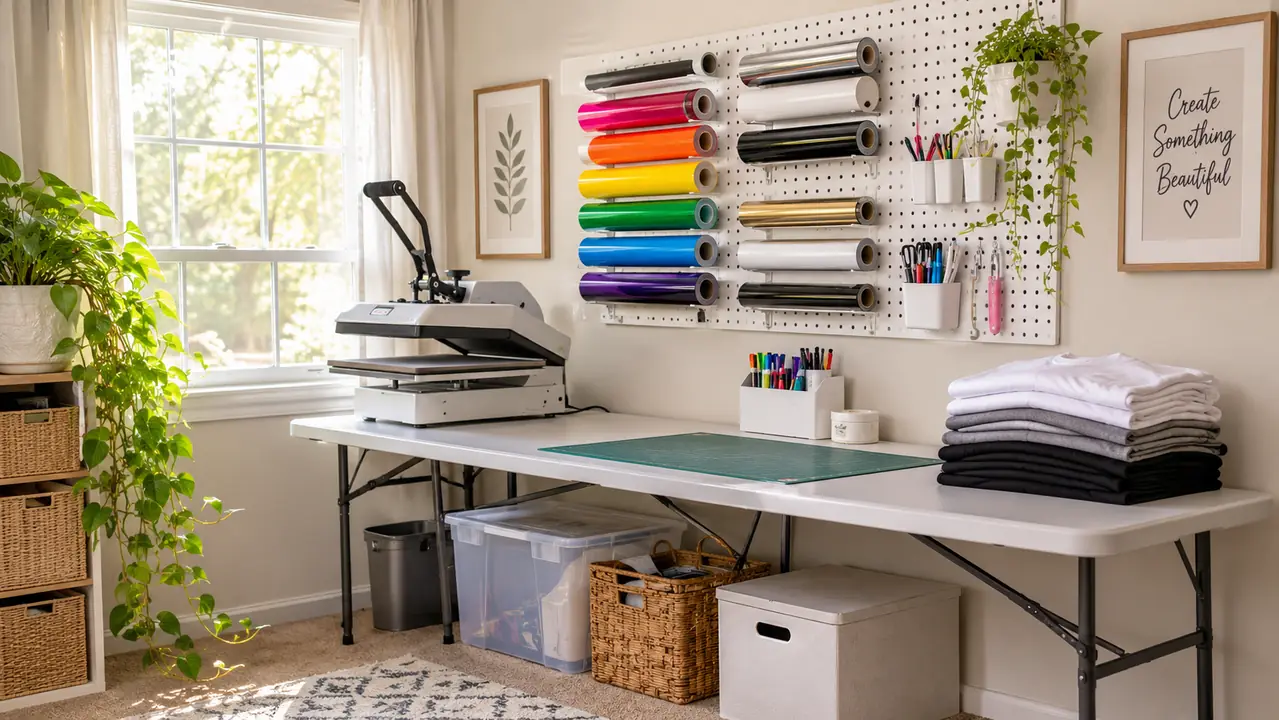
For two years I did what a lot of people do when they start cutting vinyl. I pressed shirts with a household iron and told myself it was fine. It was not fine. The first batch I sold at the Saturday market came back to me inside a month, edges lifting, the vinyl curling up like a dry leaf. That was the week I stopped treating heat as an afterthought. The machine on my folding table now is a Fancierstudio 15 x 15, and it has sat in the same spot through years of markets, church orders and a granddaughter's volleyball season. This is what long-term use actually looks like.
Nobody paid me for this and nobody sent me a press. I bought it with money from shirt orders, and I have run it hard enough that the flaws are as familiar to me as the good parts. So this is not a list of bullets copied off the box. It is what a 15 inch platen does in a spare bedroom in Columbus, Ohio, with a 52-year-old woman and her husband leaning on it at seven in the morning when twelve shirts need to be done before the market opens.
The Quick Verdict
A big platen, steady heat, and controls that do what the panel says. The three month warranty is the part nobody mentions.
Amazon Check Today's Price →The press that ended my peeling-shirt problem
Fifteen inches square, electronic time and heat control, and a Teflon coated platen that still releases a shirt cleanly after years of use. This is the one on my table.
Amazon Check Today's Price on Amazon →How I've Used It
The press lives on a long folding table against the wall, between the pegboard of vinyl rolls and the closet shelf where I keep my blanks. It is not a small machine. The listed dimensions are 33 inches long, 23 inches wide and 20 inches tall, and that footprint is honest. When I first set it up I had to slide the vinyl rack six inches to the left so the top platen could swing clear. If you are planning to share a desk with your cutting machine, measure first, because this one wants the whole table.
A normal week runs twenty to forty shirts, a batch of tote bags for a church fundraiser, and whatever Nia's team needs that month. Busier weekends, Ray does the loading and I do the pressing, and we can move through a stack quickly once the shirts are laid out in order. The platen size is the reason. A full front print on an adult large fits inside it with room at the edges, so I am not pressing a design in two passes and hoping the seam lines up when I lift.
What actually goes under the platen: cotton tees, poly blend tees for the sports orders, canvas tote bags, mouse pads, and a handful of insulated bags for a friend who sells honey at the same market. The listing names bags, mouse pads and t-shirts as recommended uses, and that matches what I have put through it. Thicker canvas wants more time and a touch more heat than a shirt does. I learned that the expensive way on a fourteen bag church order in October. The first bag I pressed on my shirt setting and peeled the backing while it was still hot, and a corner lifted before the bag had cooled. The second one I overcorrected and scorched the weave. The third one came out right, and I wrote the numbers in the notebook. Fourteen bags later my hands knew the drill, but those first three taught me more than any tutorial I watched.
One thing I did not expect to care about: how fast it comes back up to temperature. At 1800 watts and 110 volts, the platen recovers between presses quickly enough that I can keep a rhythm going rather than standing there watching a number climb. On a twelve-shirt morning that adds up to a real difference in how tired I am at the end.
The 15 x 15 Platen and What It Changes
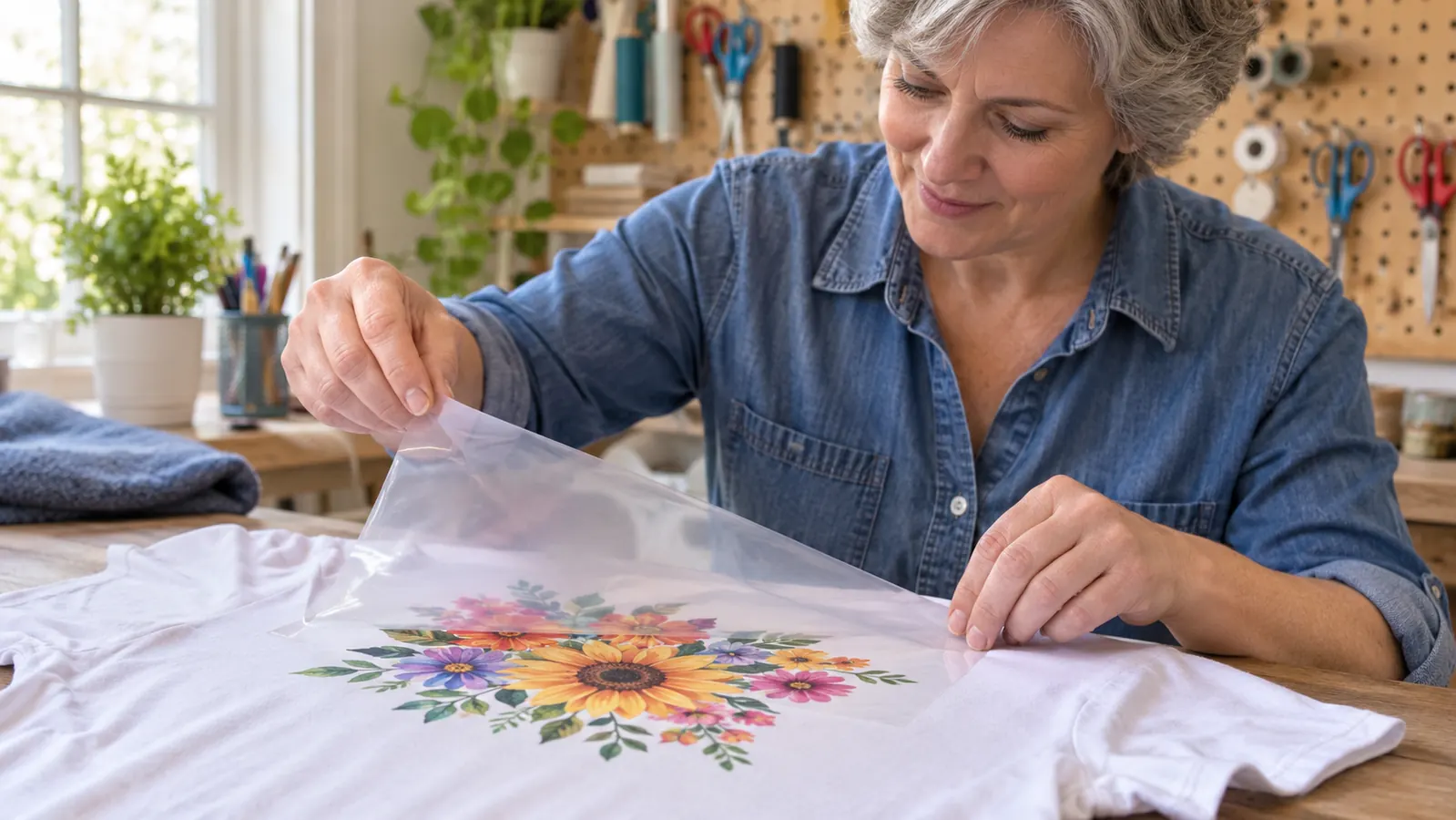
Fifteen inches square sounds like a spec until you are laying out artwork. On a smaller press, an adult 2XL front print means either shrinking the design or repositioning the shirt mid-press, and repositioning is where registration drifts. Before I owned this Fancierstudio, I did a 2XL back print in two passes with an iron. I lined the second pass up by eye, and by eye is not a measurement. That shirt went to a man who wore it to the market every Saturday for a whole season, and the seam sat a quarter inch off center the entire time. I saw it every week. With fifteen inches I set the shirt once, press once, and lift.
The platen carries a Teflon coating, which the listing calls out, and after years of use it still releases a shirt cleanly without a cover sheet on most jobs. I use a sheet anyway on dark poly blends because I do not trust dye migration and I would rather spend four seconds than lose a shirt. The coating has worn smooth in the middle where most of my pressing happens. It has not flaked and it has not started grabbing fabric, which is the failure I was braced for.
Where the size cuts the other way is small items. Pressing one baby onesie or a single pocket patch on a fifteen inch platen means the item is swimming in the middle of a large hot surface. You can do it. I do it. But you have to lay the item flat, check it twice, and be careful where your hands go before the top comes down. A big platen is not fussy about big jobs and it is a little fussy about tiny ones.
The machine itself is heavy and it does not travel. Once it is on the table, it stays there. That suits me because the spare bedroom is the craft room and nothing else happens in it. If your setup has to break down after every session, read the next section before you decide anything.
Learning the Controls and the Heat
The controls are electronic, with separate settings for temperature and for time. The listing gives a temperature range of 0 to 699 degrees Fahrenheit, a time range of 0 to 999 seconds, and an upper temperature rating of 500 degrees. I have never had a reason to go near the top of that range. Cotton vinyl presses around 305 to 320 in my room, and poly blends want a little less heat and a shorter dwell.
What matters over years is whether the number on the panel matches the number on the shirt. Mine has held steady. I checked the platen with an infrared thermometer early on, out of suspicion more than anything, and it read close enough to the set point that I stopped worrying about it. The timer counts down and stops, which sounds like nothing until you have stood over a press counting in your head while somebody's grandchild runs through the room. Precise timing is the difference between a shirt that survives the wash and a shirt that lifts at the collar.
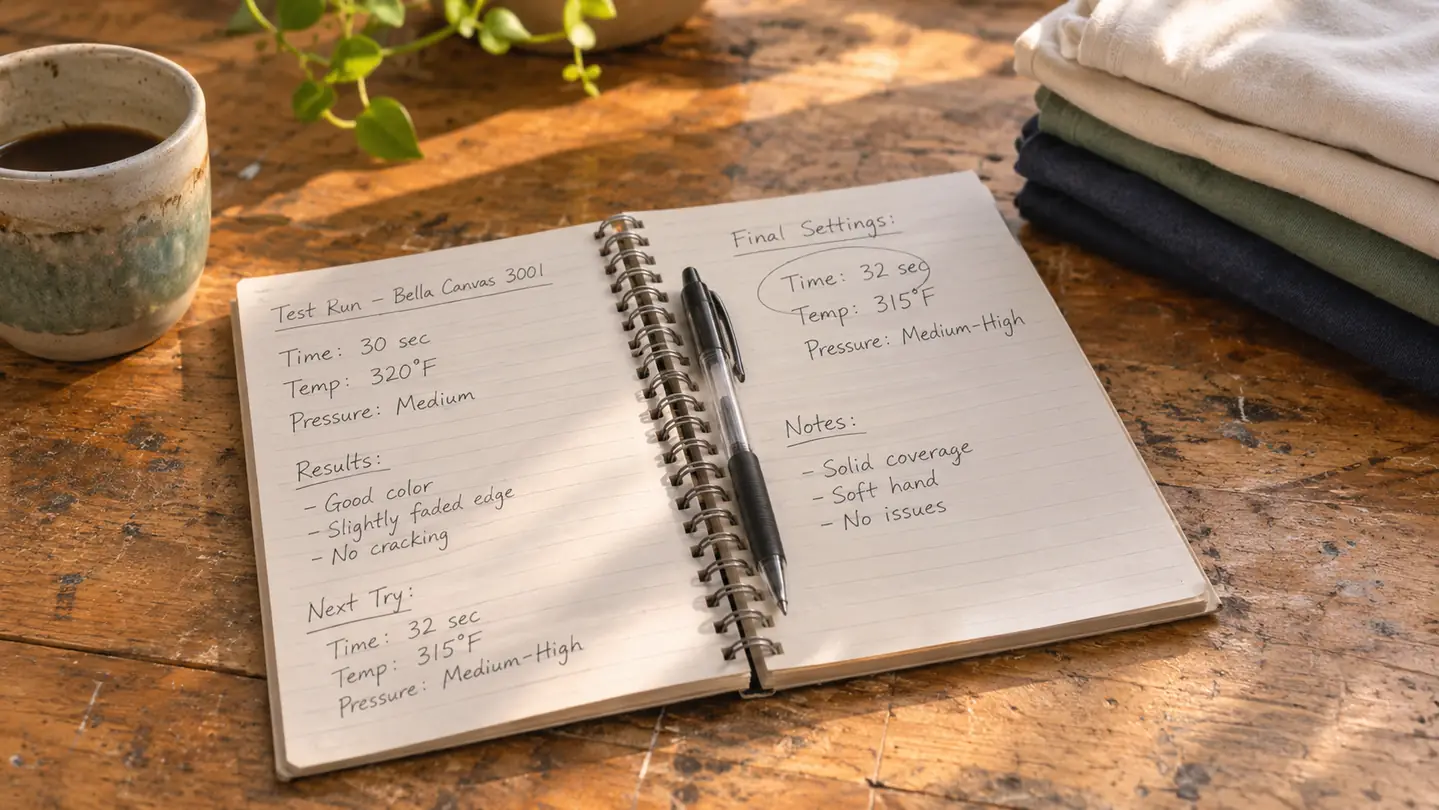
The learning curve was not the Fancierstudio. It was me. My first month of shirts were pressed too light and too fast because I was impatient, and I blamed the press for a while before I admitted what I was doing. Once I slowed down, ran a test press on scrap at the start of every session, and kept a notebook of time and temperature for each blank type, my failure rate dropped to almost nothing. The notebook is a spiral pad with one page per blank, written in pencil because I revise it. The cotton tee page has three crossed-out entries and one that stuck. The jersey page has a note underlined twice: shorter dwell, watch the corners. When Ray presses without me, he reads the notebook first. That system has saved more vinyl than any tool I have bought.
A Volleyball Season, Start to Finish
The order that tested it hardest was Nia's team last fall. Eleven girls, home and away jerseys plus practice shirts, so somewhere north of thirty pieces, each with a number on the back and a small logo on the front. Ray laid them out and I pressed, across two evenings, because that is what our backs allow. The platen size is what made it possible to do a number and a logo on the same shirt without reloading it into a second position and gambling on the alignment. The first evening I got through eighteen jerseys and stopped because my shoulder was done. We finished the rest on the Tuesday before the first away game, and nothing lifted.
The jerseys were a poly blend, which is where a press with sloppy temperature control shows its seams, literally. Too hot and the vinyl glazes and the shirt takes a scorch line. Too cool and the edges lift after the second wash. Because the panel held its number, I could set the temperature, shorten the dwell for the thinner fabric, and repeat that same setting across all thirty pieces without rechecking it every time. Two of the practice shirts came out slightly glossy at the corners. That was my stacking error, not the machine's, and I have stopped stacking.
Where It Falls Short
The warranty is three months. Not three years. Three months. On a machine this heavy that is a short window, and it tells you something about how the company expects the press to be treated. Mine has gone well past that window without a problem. I marked the date on the kitchen calendar and spent those first months listening to the press the way you listen to a car that has just been serviced. Nothing happened. It has been dull and steady ever since. I still think the window is too short, and you deserve to know the number before the box arrives.
It is heavy, and moving it is a two-person job that I would not repeat on a whim. At 1800 watts and 110 volts it also wants a circuit that is not already loaded. I tripped a breaker once by running it on the same outlet as a space heater in January, and it has had its own circuit ever since. That is not a defect. It is what 1800 watts means, and it is worth knowing before you plug it into a power strip with three other things on it.
And there is no getting around the fact that a press this size takes up permanent room. If your crafting happens on the kitchen counter and gets packed away before supper, the 33 by 23 inch footprint is an argument you will have with yourself every week. I know people who make it work. They are tidier than I am.
What I Liked
- Full 15 x 15 platen fits an adult 2XL front print in a single press
- Electronic temperature and time controls have held their settings over years of use
- Teflon coated platen still releases shirts cleanly, with no flaking
- Handles shirts, canvas totes, mouse pads and insulated bags without changing setup
- 1800 watts brings the platen back up to temperature quickly between presses
Where It Falls Short
- Three month warranty is short for a machine this heavy
- Heavy and awkward to move once it is set up
- 1800 watts needs its own circuit and will trip a loaded breaker
- A 15 inch platen is far more surface than a single small item needs
- Small items like onesies feel lost in the middle of it
Four years of markets, church orders and one volleyball season later, the coating has worn smooth in the middle and has not flaked once.
Who This Is For
This press suits someone who has moved past the iron and is pressing enough shirts that consistency matters. Team orders, market inventory, fundraiser totes, a steady trickle of custom work from friends and church. The 15 x 15 platen and the electronic controls will do that job without drama, and the Fancierstudio will keep doing it as long as you keep a spare circuit free and a notebook handy.
It also suits a person who is willing to test on scrap and write down what worked. The machine will hold a temperature. It will not tell you what temperature your particular blank needs. That part is on you, and the people who get along best with a press like this are the ones who treat the first press of the day as a check rather than a waste of vinyl.
Who Should Skip It
Skip it if your crafting shares a table with dinner, if you cannot give it its own outlet, or if you press a handful of shirts a year and mostly want something for a hobby night. A 33 by 23 inch machine with a three month warranty is a lot of commitment for four shirts.
Skip it too if you want a warranty you can lean on for a year. That is a reasonable thing to want. It is just not what this listing offers, and you are better off knowing that before the box arrives than after.
If your shirts keep peeling, the problem is heat, not the vinyl
Fifteen inches square, electronic time and temperature control, and a platen that has held its settings through years of Saturday markets. Check the current price and the listing details before you commit the table space.
Amazon Check Today's Price on Amazon →