
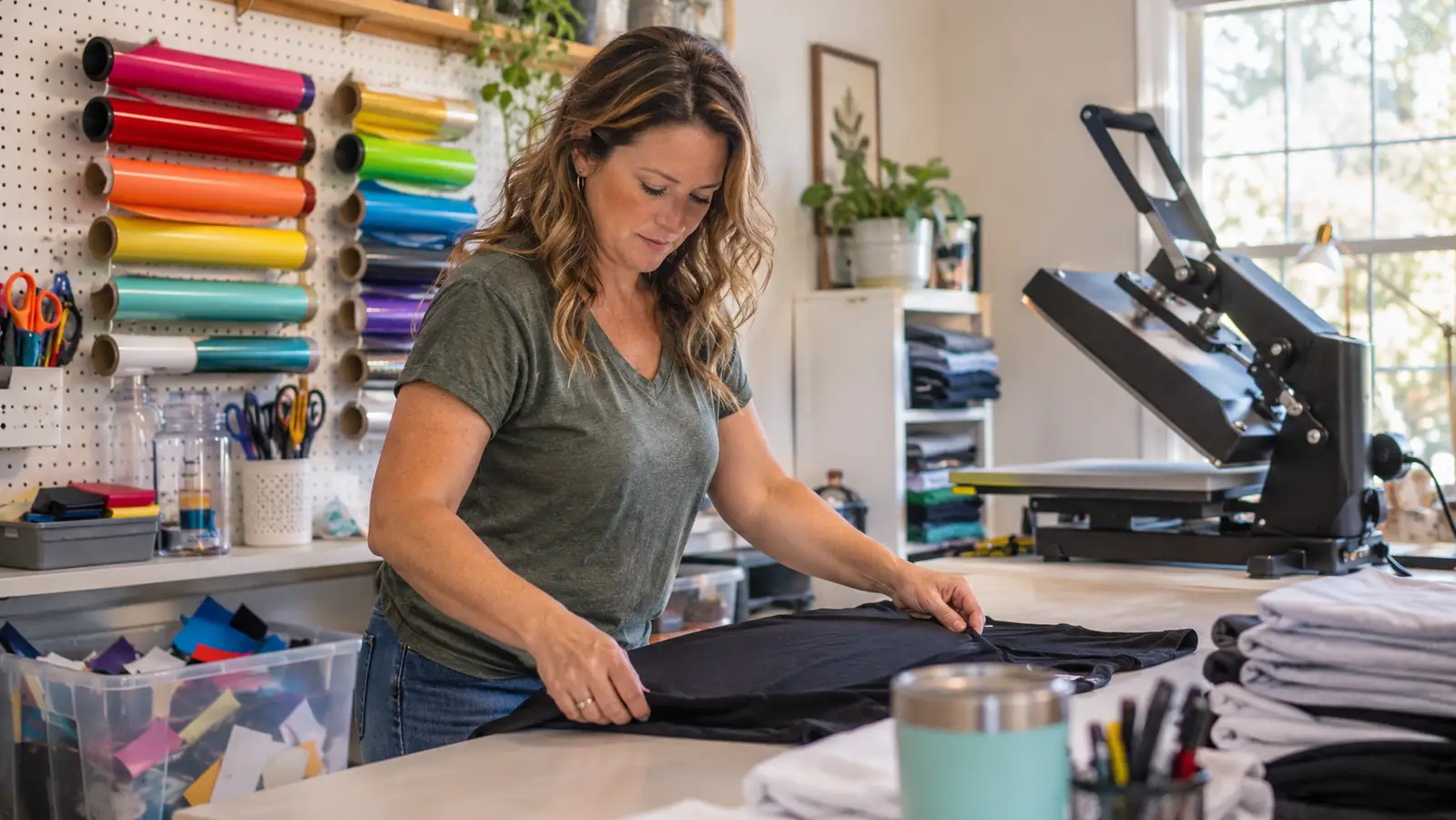
The shirt that broke my iron was a youth volleyball jersey for my granddaughter Nia, who is 11, and her team. I had cut the number and the name in vinyl, lined them up on the back, and pressed with a household iron because that was what I had. The vinyl lifted at one edge. I pressed again. Then I scorched the mesh near the shoulder. Nia did not say anything, which was worse than if she had.
I am Darlene Okafor, 52, and I run a small custom decal and shirt table out of our spare bedroom in Columbus, Ohio. The room has one long folding table, a pegboard wall for vinyl rolls, and a closet shelf for blanks. I started cutting vinyl about four years ago, after years as a school office manager. Most of my work goes to a Saturday craft market a couple of times a month, plus friends, church, and the sports teams Nia plays on. I ordered the Fancierstudio 15x15 digital heat press because I needed the whole design pressed at once, not in sections I had to line up twice.
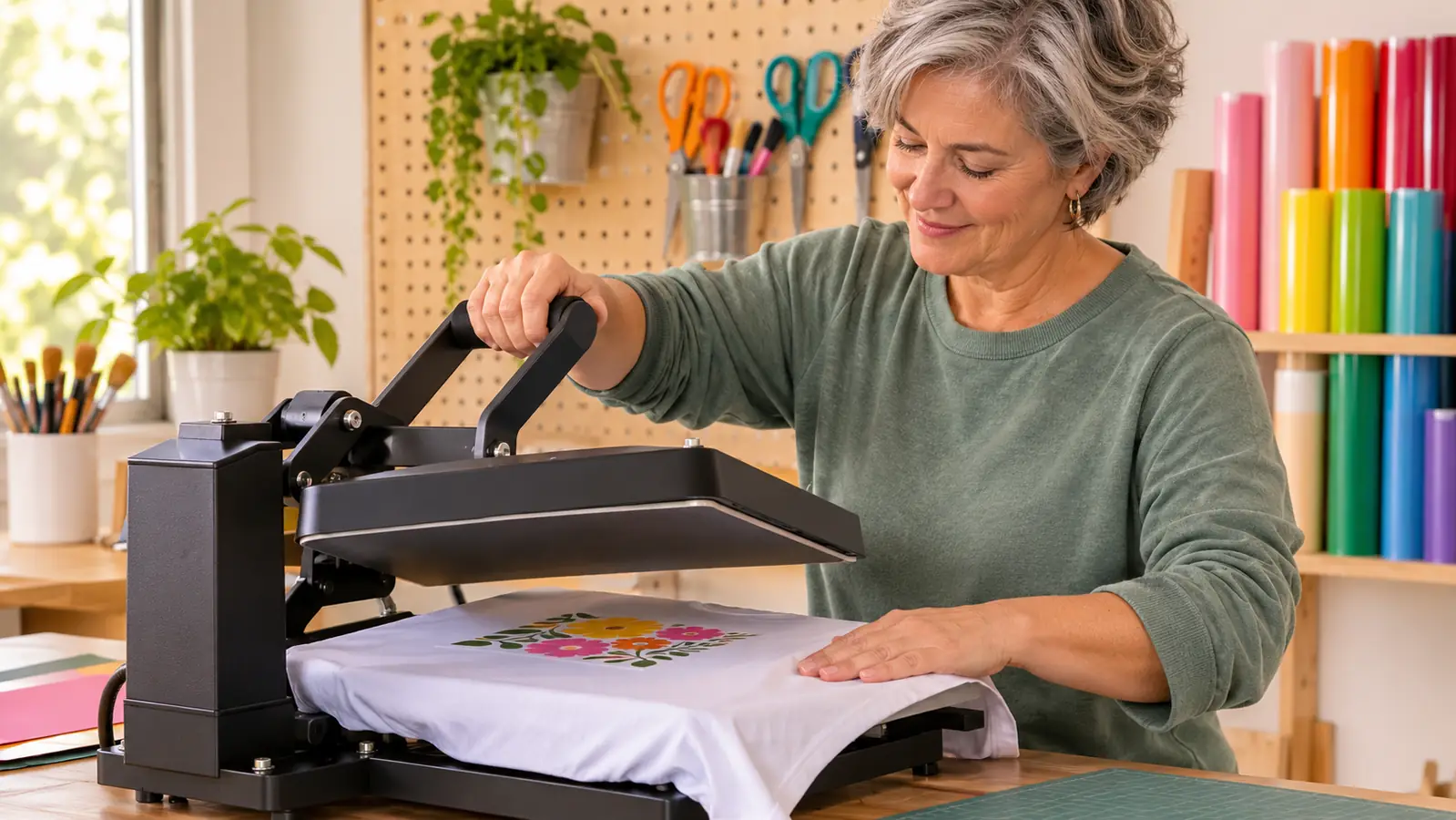
The machine is not a tabletop gadget. It is 33 inches long, 23 inches wide, and 20 inches tall, with a 15-by-15-inch heat platen. It runs on 110 volts and 1800 watts. The temperature range goes from 0 to 699 degrees F, and the time range goes from 0 to 999 seconds, which is more range than I need for cotton shirts. The controls are electronic, so I can set a temperature and a time and walk away to trim the next design. The heat platen has a Teflon coating. I did not know why that mattered until a bit of stray vinyl stuck to a shirt and peeled off clean.
My first real job on the Fancierstudio was a set of shirts for the church fall supper. I set the temperature, set the time, and pressed one shirt to check. The vinyl sank into the cotton the way it is supposed to. The second shirt went faster because I was not standing there counting seconds with one eye on the iron and one eye on the clock. The 15-by-15-inch platen covered the whole back design in one press. That sounds like a small thing until you have spent a Saturday pressing a design in four passes and hoping the seams line up.
It is not a substitute for testing. My first press on a polyester blend was too hot, and the shirt showed a faint shine at the collar. I turned the temperature down and tested on a scrap piece before I touched another good shirt. The timer is only useful if you use it. The machine will hold a temperature, but it will not tell you that your fabric is too thin for the setting you chose. That is still my job.
The 15-by-15-inch platen covered the whole back design in one press. That one fact ended my re-press pile.
The press that ended my re-press pile
If you are still pressing shirts with a household iron, the Fancierstudio 15x15 is the upgrade that changed my table. Check the current listing for the full specs and today's price.
Amazon Check Today's Price on Amazon →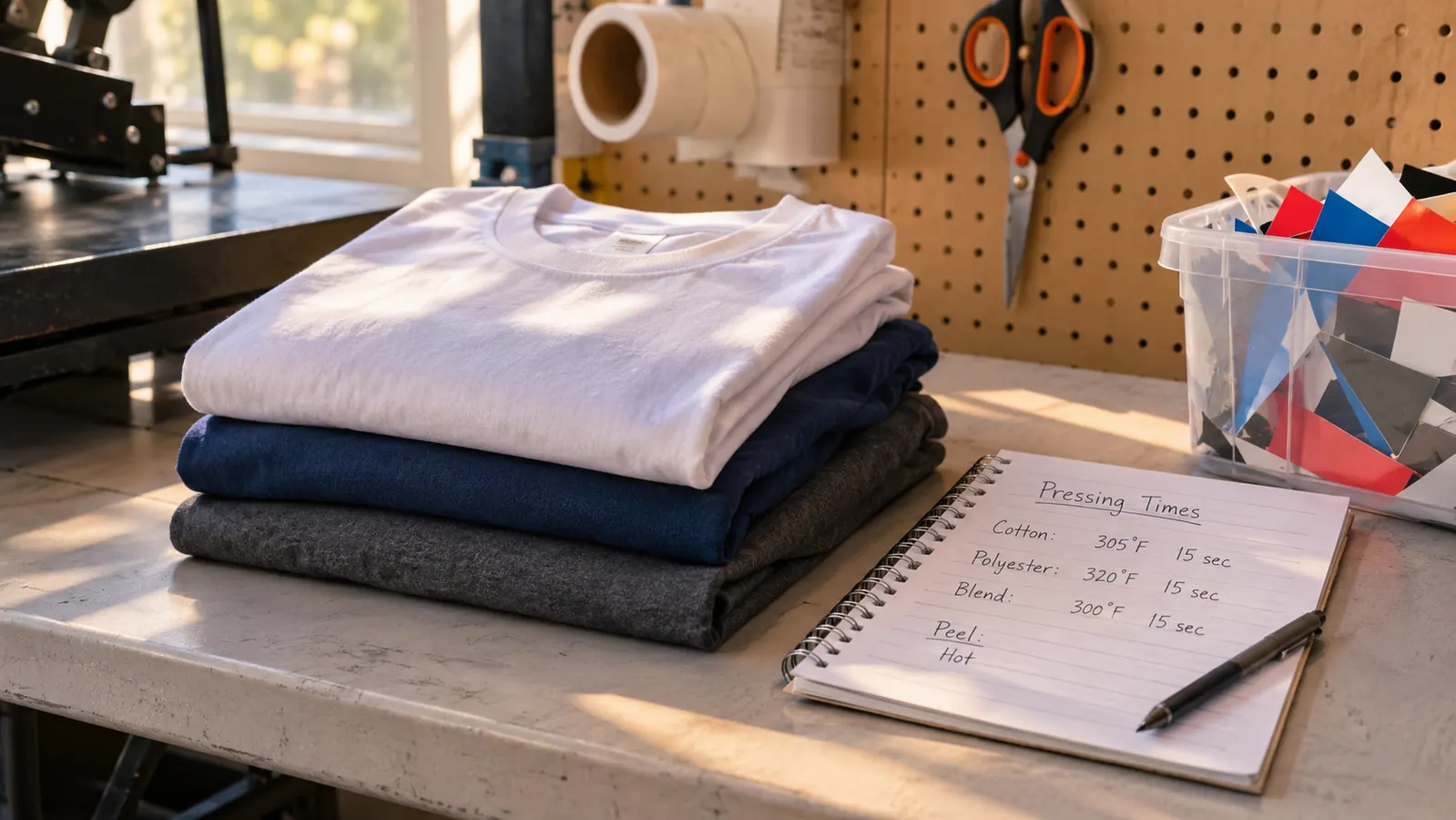
My husband Ray helps me on busy weekends. He presses the shirts while I cut and weed the next batch. We put the Fancierstudio at the far end of the folding table, near the outlet, because the machine is 33 inches long and takes up real space. The first Saturday we used it, we cleared the table twice as fast as we used to. I am not going to pretend that is all machine. Part of it is that neither of us is standing over an iron, waiting to see if the vinyl lifts.
I have used it on cotton shirts, a canvas tote, and a mouse pad, which are the kinds of blanks the listing recommends. The tote needed a second press because the handle seam made one side sit higher, and I did not want to force the platen down and risk a crooked image. That is a workaround, not a flaw in the machine. The mouse pad was the easiest job I have run through it. Flat, thin, and no seams. I set the time, pressed, and it was done.
The tradeoffs are real. The warranty is 3 months, which is short for a machine that takes up this much table. It is 33 by 23 by 20 inches, so measure your space before you order. It needs a 110 volt outlet, and I would not share that circuit with a heat gun or a second press. The Teflon coating helps, but it does not make the machine self-cleaning. I still wipe the platen after a messy job. And the first few presses on any new blank are tests, not production. I keep a scrap bin beside the table for that reason.
What I'd Tell You If We Were Sitting at My Kitchen Table
If you are sitting at your own table with a shirt that half pressed and a roll of vinyl you do not want to waste, I would tell you to stop fighting the iron. A heat press is not a shortcut around learning your material. It is a way to remove one variable. The Fancierstudio gives you a 15-by-15-inch platen, a temperature range up to 699 degrees F, a timer up to 999 seconds, and electronic controls that hold a setting while you do something else. That is the whole case. It does not know your fabric. It does not fix a bad cut. It will not make a business out of a hobby. It will press a full design flat, and it will do it again on the next shirt if you set it right. If you have been pressing in sections, or if you have ruined one too many shirts with an iron, this is the upgrade I would make first. I would buy it before I bought another bundle of blanks.
If the iron is still on your table, this is the swap
The Fancierstudio 15x15 is the machine that cleared my re-press pile. See the current listing for specs, warranty details, and today's price.
Amazon Check Today's Price on Amazon →