
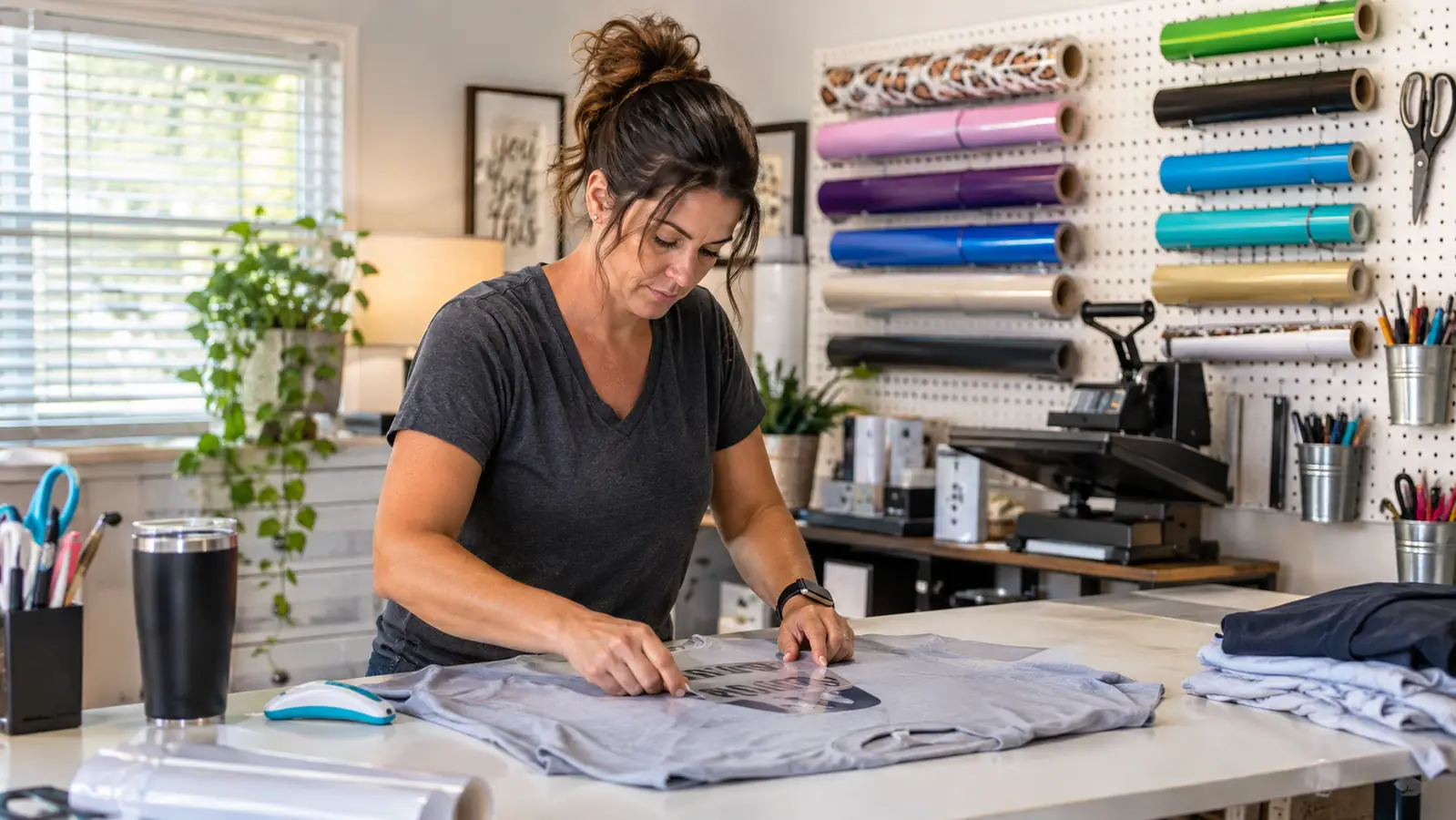
Four years ago I pressed my first batch of shirts with the iron that lives in our hall closet. Six went out. Two came back with a scorch mark shaped like a soleplate. One had the transfer lifting at the corner before the girl who ordered it had worn it to practice. I blamed the vinyl, then the transfer paper, then the humidity in the spare bedroom. It was the iron the whole time.
So here is the short answer before the long one. A household iron will put a heat transfer onto fabric. It will not put it there the same way twice, and on anything larger than a pocket it will not put it there evenly. The Fancierstudio 15x15 heat press gives you one flat, heated platen 15 inches square, an 1800 watt element running on 110 volts, and a timer that counts seconds so the two hundredth shirt matches the first. Keep the iron if you press a few small decals a year onto things that already lie flat. Buy the press if you are pressing full backs, totes, or anything for another person who paid you.
| Fancierstudio 15x15 Heat Press | Household Iron | |
|---|---|---|
| Pressing surface | A flat 15 x 15 inch platen that covers a full back print in one pass | A soleplate about the size of a hand, moved around in overlapping sections |
| Heat and time control | Electronic heat and time control, 0 to 699 degrees F and 0 to 999 seconds, repeatable to the second | A dial marked with fabric types and no timer at all |
| Pressure | Comes from the handle and stays even across the whole platen | Comes from your arm, and shifts the moment you reposition |
| Space it takes up | 33 inches long, 23 wide and 20 high of table you cannot use for anything else | Lives in the closet and comes out when you need it |
| Cost of entry | A real purchase before you have made a single shirt | Already in the house |
| Curved and odd shaped items | Wants a flat surface, so zippers, cuffs and gussets fight it | The nose of the soleplate reaches places the platen cannot |
| Learning curve | A week of test blanks before your time and temperature settle | Familiar from the first shirt, though familiar is not the same as accurate |
| Warranty | 3 months on the machine | Whatever it came with, long since lost |
What the Specs Actually Tell You
The numbers on the Fancierstudio listing are worth reading slowly, because they describe a specific machine and not a general one. It draws 1800 watts at 110 volts. That is enough to want its own wall outlet rather than a power strip shared with a vinyl cutter, a laptop and a lamp, and in my spare bedroom it meant moving the cutter to the other side of the table. The controls take you from 0 to 699 degrees F and from 0 to 999 seconds. I have never needed the top of either range. Shirt work settles into a narrow band of time and temperature that you will find within a week of test blanks. I bought a bundle of six blank shirts from a rummage sale and used all six in the first two evenings, writing the number on each one before I cut it into a rag. By the seventh I had a time and a temperature I trusted, and I have not moved off them since.
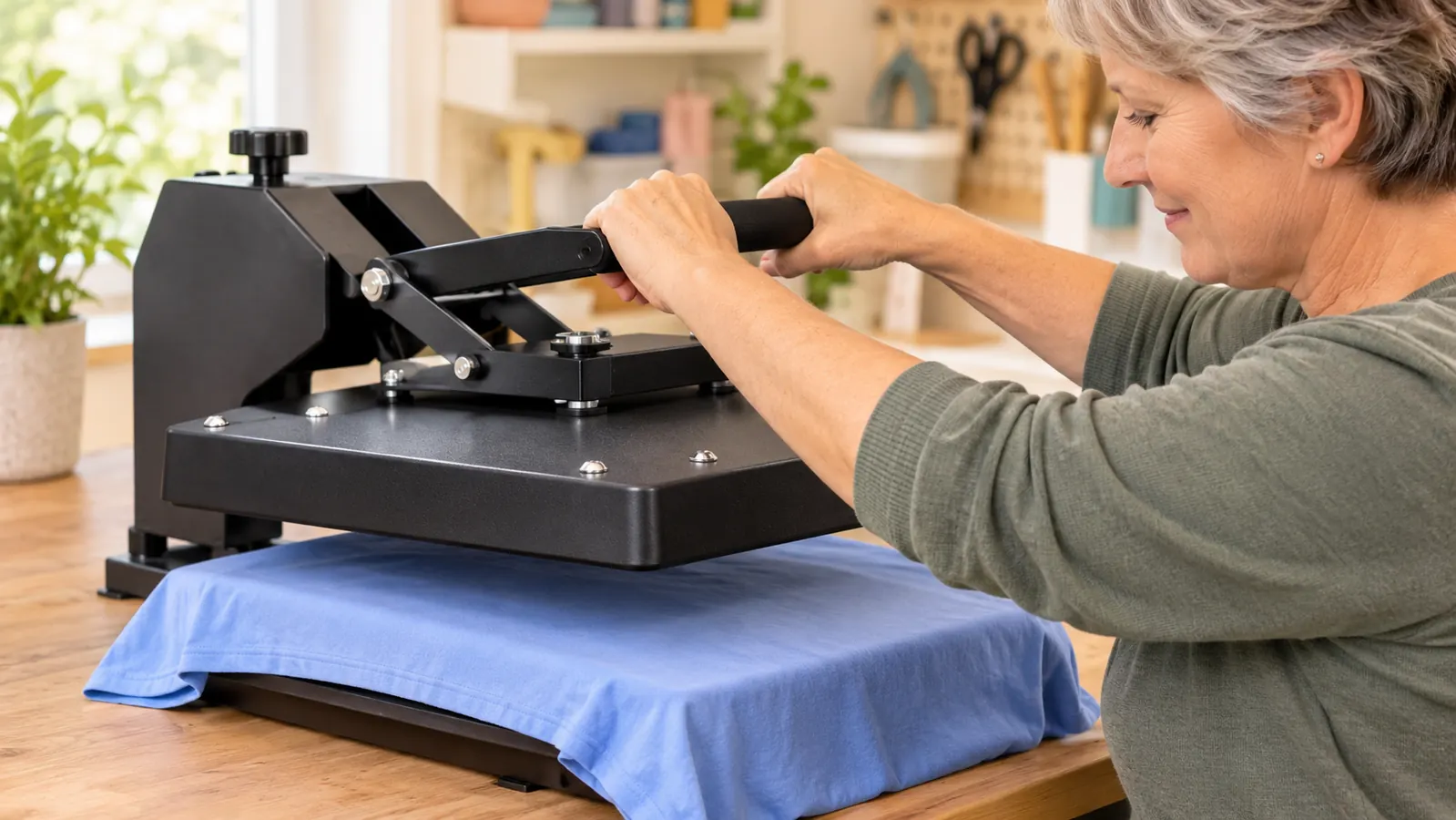
The platen is 15 by 15 inches and it carries a Teflon coating, and the coating is the detail I notice most now. Adhesive residue and stray glitter wipe off a coated platen with a rag. On a bare one they bake on and then transfer to the next shirt as a faint ghost. The machine also ships with a 15 by 15 heat press sheet, which you will use more than you expect, and it carries a 3 month warranty. Three months is short. I would rather tell you that now than have you find out in month five.
Then there is the measurement that decides whether any of this matters: 33 inches long, 23 inches wide and 20 inches high. That footprint is the entire argument for some people and the entire reason to walk away for others. On my long folding table it takes the last third and does not move again. If your only work surface is the kitchen counter, think hard about where this lives before you order it, not after it arrives.
Where the Fancierstudio 15x15 Wins
Consistency is the whole case. An iron depends on your arm: how hard you lean, whether you lift the nose to check a corner and lose contact, whether the soleplate is truly flat against a seam. The press depends on a handle that comes down and stays down. With electronic time and heat control and a timer that stops the count at the number you set, the last shirt of the afternoon comes out like the first one of the morning. That sounds like a small thing until you are pressing twelve shirts for a team and the twelfth is the one a parent photographs.
Size is the second case. A full back print on an adult shirt needs more than a hand sized hot zone. Moving an iron across a 15 inch design means overlapping passes, and every pass is a chance to shift the transfer a quarter inch or scorch an edge you already pressed. A 15 by 15 platen covers the design once. An adult small back print with a number under it runs about eleven inches across. That is wide enough that a soleplate has to travel two or three times, and every trip is a chance to catch an edge. It fits inside the platen with room left over. I press middle school volleyball backs, and the difference between one press and five passes is the difference between a shirt I would sell and a shirt I would apologize for.
The third thing is throughput, which matters when two people are working. Ray takes the press on busy Saturdays while I cut and weed, and neither of us has to hover over the other. The machine holds its setting while we swap shirts on and off the platen. An iron has no setting to hold. When I stepped away from the board, it kept cooking whatever was under it, and I came back to a scorched tee more than once.
Where a Household Iron Wins
Space and cost of entry, and I am not going to pretend otherwise. The iron is already in the hall closet. The press needs 33 by 23 inches of permanent table and an outlet that is not already loaded. In a small apartment, or a house where the craft table has to become a dinner table at six, that is not a footnote. It is the deciding fact. If your setup has to disappear every evening, the iron wins by default and no amount of even pressure changes that.
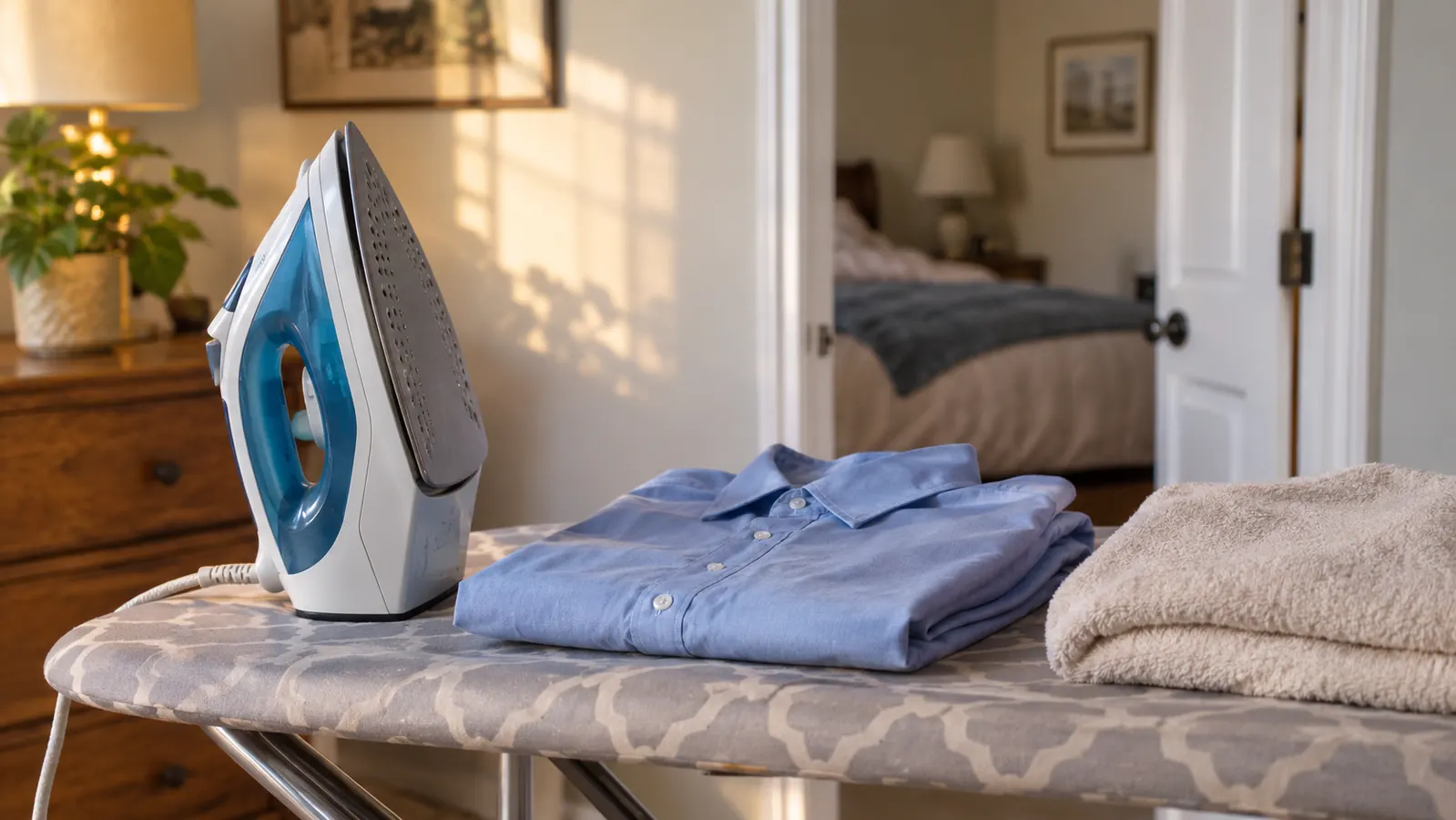
The iron also reaches places the press cannot. A onesie with a zipper running down the front, a tote with a stiff gusset, the leg of a pair of shorts, a drink sleeve: none of these lie flat on a platen, and all of them can be worked around with the nose of an iron and a pressing cloth. When an order comes in for something shaped badly, I still pull out the iron and a towel on the dining table. The press is better at flat. It is not better at everything. A run of drawstring party bags last spring is the example I keep coming back to. The cords and the gathered top make a lump under any platen, so I did them one at a time on the dining table with the iron and a folded towel, and every one came out clean.
Twelve shirts for a team, and the twelfth came out like the first. That is the whole reason the machine is on my table.
If your table can hold 33 by 23 inches, it can stop guessing
The Fancierstudio 15x15 gives you a flat 15 inch platen, electronic heat and time control, and the same result on shirt one and shirt fifty. Have a look at the current listing before you decide.
Amazon Check Today's Price on Amazon →The Mistakes I Made With the Iron
Before the press, my method was a towel on the dining table, a hot iron with no steam, and a lot of hope. The failures were consistent once I wrote them down. The transfer slid on the second pass because I lifted the iron to look at it. The shirt had a crease under the design because I pressed over a fold instead of ironing it out first. The corner of a back print lifted because the soleplate never got full contact there, no matter how I leaned. It took me until the second autumn of doing this to write the failures down on the back of a cutting mat. Seeing them in a column instead of scattered across a year was the first useful thing I did about any of it.
The worst one was a set of shirts for a church picnic. I did them in one evening with the iron set to cotton and no timer, judging each one by feel. Six of the ten were fine. Two came out slightly glossy where the soleplate sat too long. Two peeled at the edges within a week, and one of those was for a woman who had ordered it to match her husband. I replaced all four out of my own materials and decided I was done judging by feel.
What Changed Once the Press Was on the Table
The press removed the two variables I could not control: pressure and time. I lay the shirt down, the handle comes down, the timer counts, the timer stops, the handle comes up. Nothing under the platen shifts because nothing is moving. That is the mechanical difference, and it is boring to describe, which is usually how you know it is real.
The second change was smaller and more useful. I stopped dreading repeat orders. When someone comes back for a fourth shirt in the same design six weeks later, I do not have to remember what I did with my hands that night. I read the note on the pegboard and set the same numbers. The Teflon coating helps here too, because a clean platen means the fourth shirt does not pick up a ghost of the first. I also stopped cutting a spare of every design. That habit came from the iron years, when I assumed at least one shirt per batch would land in the rag pile. It does not anymore, so I stopped, and the vinyl I save in a month is not a small amount.
What a Market Saturday Actually Looks Like
The table goes up at seven. Ray sets the press on his end of the folding table, plugs it into the outlet on the wall behind him, and turns the controls to the numbers on my note. I do not clock the warm up, because I am busy setting out finished shirts. By the time the first person stops to look, the platen is hot and the press sheet is on it.
What I notice most is that I can talk to people while a shirt is pressing. With the iron, every shirt needed my full attention for the whole four or five minutes, and anybody waiting got the back of my head. With the press I set it, drop the handle, and answer a question about sizing while the timer counts. That is not a sales figure and I am not going to give you one. It is just a nicer way to spend a Saturday.
Who Should Buy Which
Buy the Fancierstudio 15x15 if you are pressing flat goods for other people on any kind of schedule. Full back prints, front chest logos, totes that lie flat, mouse pads, and anything you make more than a handful of times. Buy it if you have a dedicated surface at least 33 by 23 inches and an outlet to spare. Buy it if the thing that keeps going wrong is the thing that goes wrong for everyone with an iron, which is that your hands are not a machine.
Keep the iron, or keep using it alongside the press, if your work is small, occasional and shaped badly. Curved items, zippered fronts, cuffs and anything that has to be pressed around a curve still belong to the iron. Keep it too if the table has to be cleared for dinner, because a 15 by 15 press is not a thing you put away. Plenty of people I know run both, and there is no rule that says the iron has to leave the house.
One flat platen, one timer, and no more judging by feel
The machine that ended my scorched shirt problem is the one with a 15 by 15 Teflon coated platen, 1800 watts, and electronic time control down to the second. If your craft table has the room, take a look at the current listing.
Amazon See the Fancierstudio 15x15 on Amazon →