
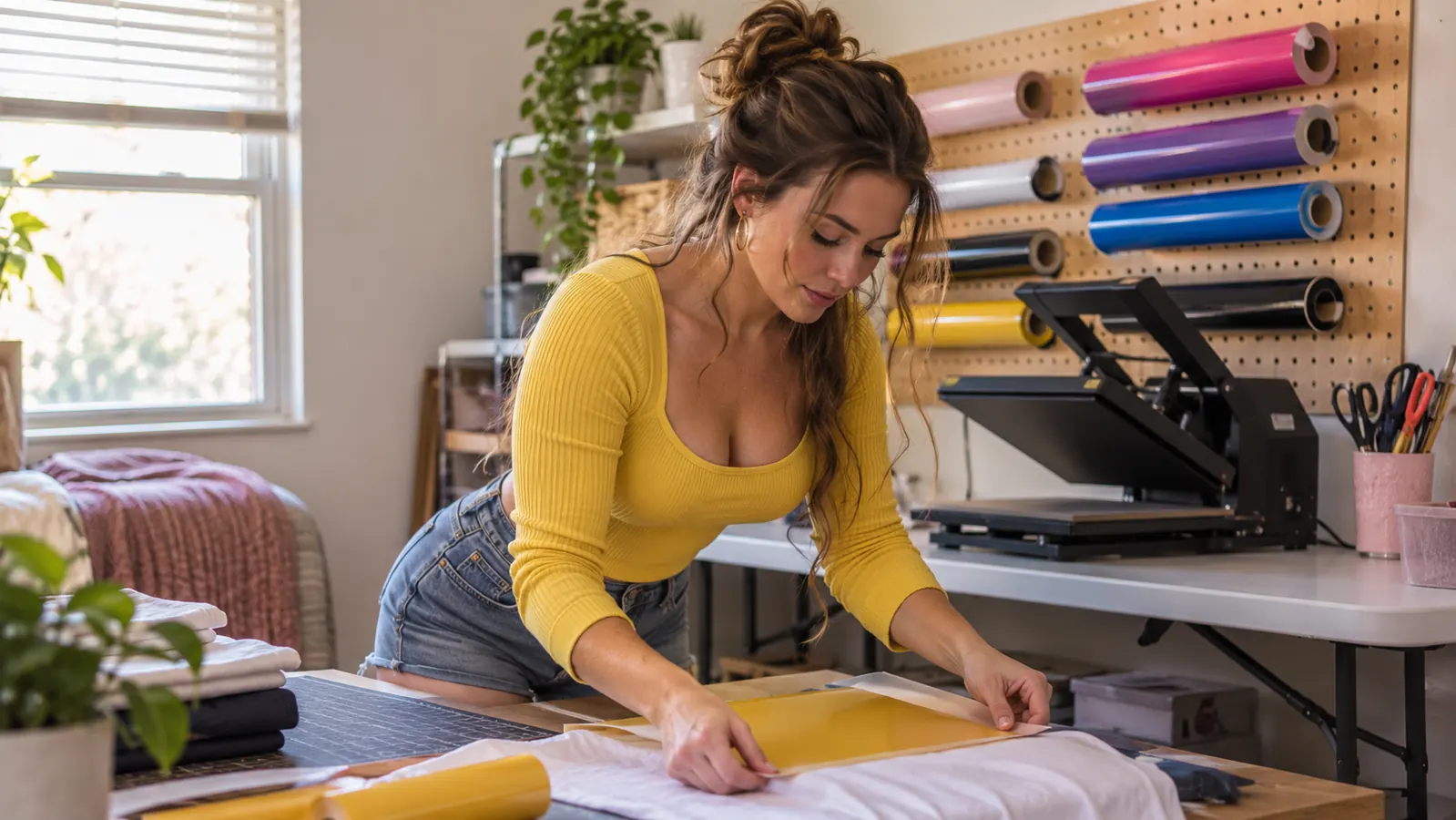
Three years ago I bought a bargain roll of heat transfer vinyl because it was cheap and I was in a hurry. I pressed forty shirts for a church fundraiser with it, and by the second wash cycle half the lettering had cracked into a spiderweb. One shirt lost an entire sleeve number. I refunded that order out of my own money, and I have been fussy about vinyl ever since.
That is the short version of why I read the spec sheet now, and why the HTVRONT HTV Roll earned a permanent spot on my pegboard. It is a 12 inch by 8 foot roll of polyurethane heat transfer vinyl, and it does the boring thing well. It sticks, it stays, and it does not turn a Saturday market order into a Tuesday night rescue job.
I should say plainly what I am and what I am not. I run a small decal and shirt table out of a converted spare bedroom in Columbus. One folding table, one cutter, one heat press that has seen better days, and a husband named Ray who helps on busy weekends. This is not a print shop review. It is a review from the person who has to explain to a customer why the name on the back of a jersey is lifting.
The Quick Verdict
A dependable everyday HTV for cotton and blends. The press window is real and it is narrow, and the cool peel is not a suggestion.
Amazon Check Today's Price →The roll I keep reordering instead of shopping around
12 inches by 8 feet of polyurethane HTV. Long enough for a full team order of adult fronts if you lay your cuts out with a little sense. Check today's price before you plan a weekend.
Amazon Check Today's Price on Amazon →How I Test HTV Before It Touches a Customer Shirt
Every new roll gets the same treatment before it goes near a paid order. I cut the same three shapes, press them onto the same cotton blank at the temperature the listing gives, then wash that shirt six times in a normal load with Ray's work clothes and no special handling. No gentle cycle, no turning it inside out, no babying it. If the edges lift, I want to find out in my own laundry basket and not in somebody else's.
The second round is the one that actually matters at a market table. I press a shirt, fold it, stack three more shirts on top, and leave the stack alone for a week. Vinyl that survives a wash but takes a permanent crease in a stack is not worth selling to a person who will hang it in a closet for a month before wearing it.
I keep the sample shirts on a shelf and label each one with a strip of masking tape. The tape carries the date and the number of washes. The oldest one up there is from a February batch and it has been through nine cycles, and the corners on the two inch letters still sit down flat. That shelf is not decoration. When a customer asks how long a name will last, I can point at a shirt instead of guessing, and pointing at a shirt ends the conversation faster than any explanation I could give.
The third round is the repeat round. I reorder the same product and see whether the second roll behaves like the first. Consistency is the whole reason to settle on one vinyl. I am on my fourth HTVRONT roll and I have not had a bad one yet, which is not a dramatic endorsement. It is the kind you want from a supplier: nothing interesting happened.
What the Roll Actually Gives You
The numbers decide what you can cut, so start there. The roll is 12 inches wide and 96 inches long, which is the 8 feet in the name, and it weighs 0.22 kilograms. A normal adult front design sits comfortably inside 12 inches. A full back print usually does not, so those get planned on something wider or split across two pieces.
The material type is polyurethane, and that detail matters more than any of the marketing language on the listing. Polyurethane HTV cuts clean, weeds without a fight most of the time, and has a little give to it once it is pressed. The stiff plasticky vinyl that cracks in the wash is a different animal entirely. You can feel the difference through the carrier sheet before the press is even warm.
The 8 foot length is the quiet advantage. When I buy sheets I get a stack of squares, and I end up piecing long names together or feeding the offcuts to the bin. On a continuous roll I can lay a whole team roster out with the names running down the roll in order. Less waste, fewer seams, and a much shorter night.
Pressing It: What the Numbers Mean in a Spare Bedroom
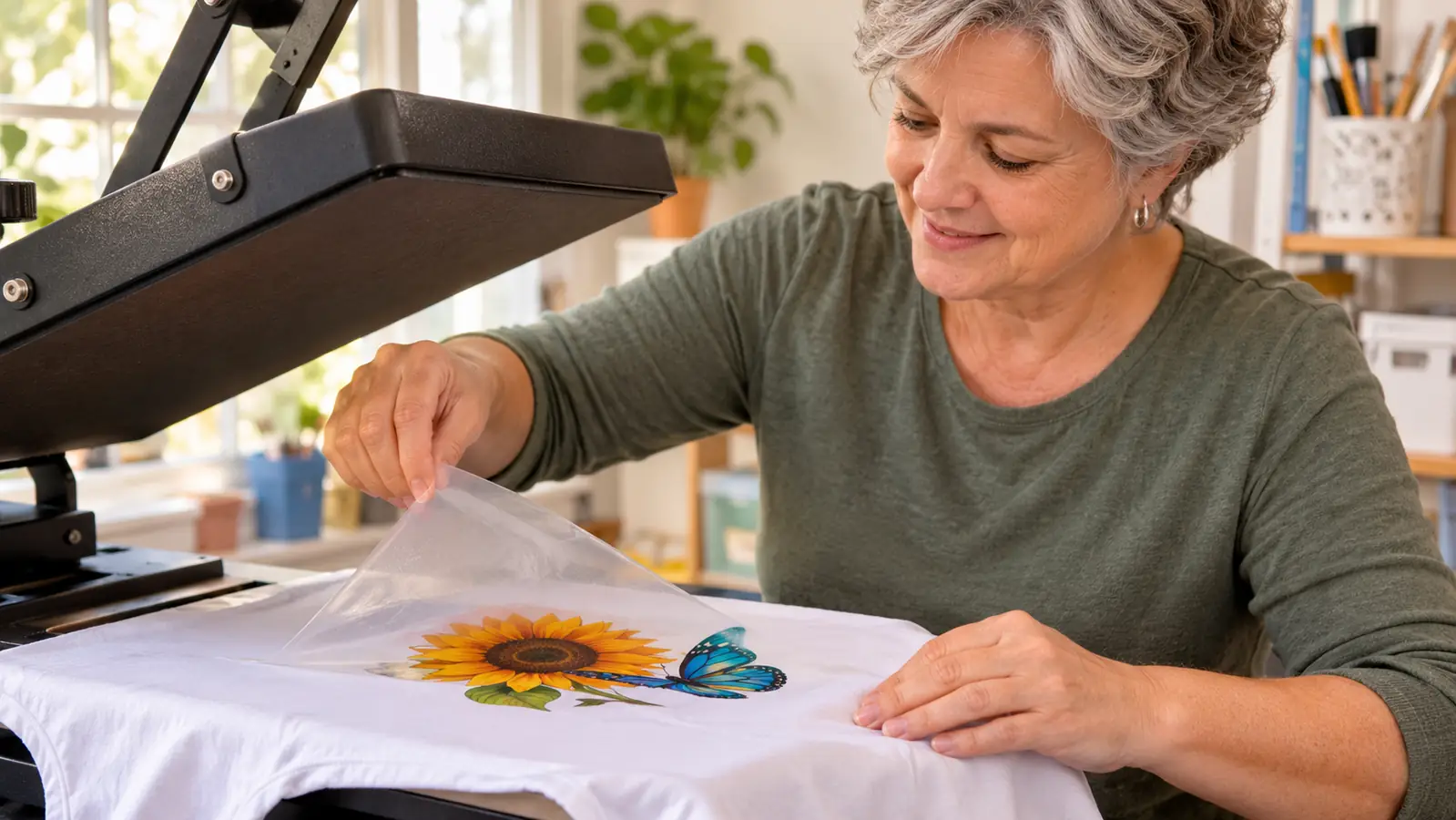
The manufacturer gives a window of 300 to 320 degrees Fahrenheit, mid pressure of 5 to 8 kilograms, and 10 to 15 seconds. Then comes the line people skip: let it cool for one to two minutes and peel afterward. That line is the entire ballgame.
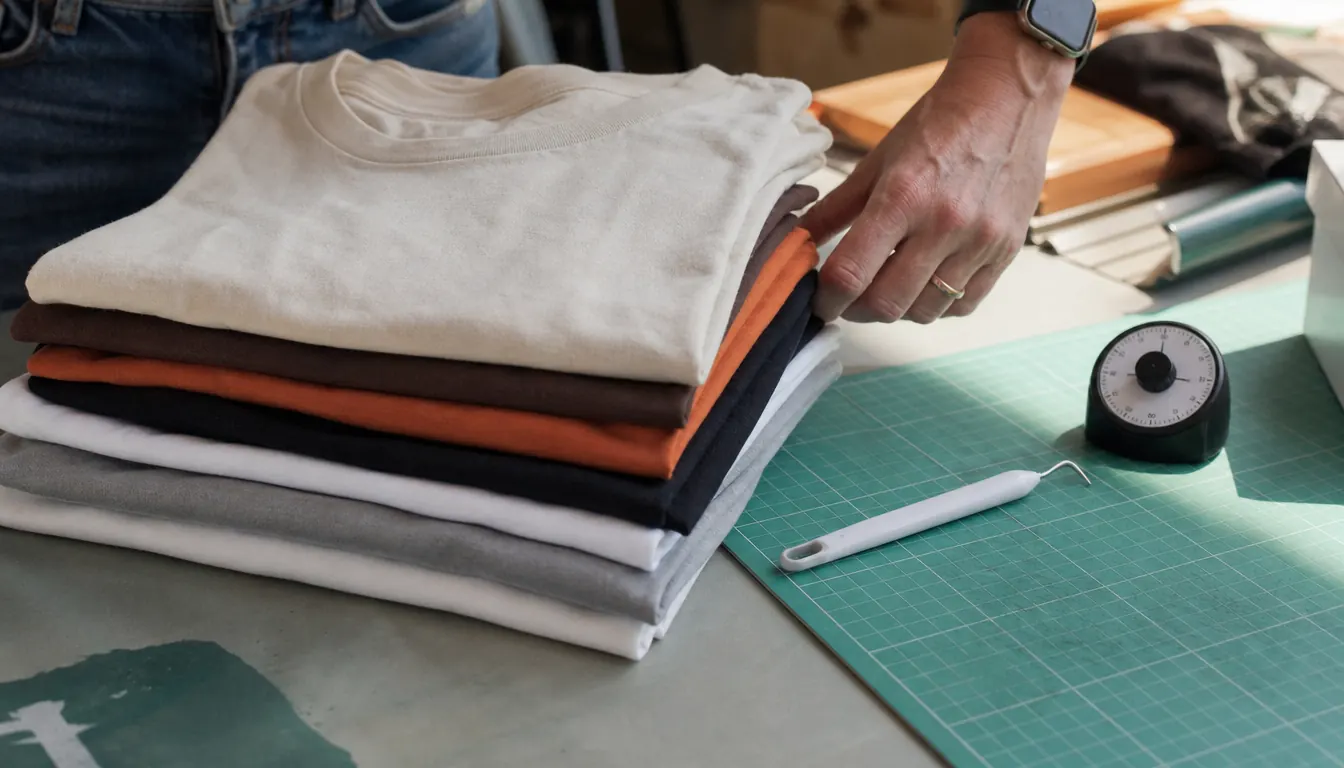
If you peel hot, the adhesive is still soft and the edges stretch out of shape as the carrier comes up. You end up with a design that looks acceptable on the table and curls at the corners after one wash. Peel it cool and the design sits exactly where you put it. I keep a small kitchen timer on the folding table because I do not trust myself to count while Ray is asking me where the extension cord went.
There is a difference between a 12 second press and a 15 second press that you can feel with your thumbnail. Twelve seconds gets you a design that looks finished. Fifteen seconds gets you one where the edge of the carrier lets go with a faint click instead of a drag. I spent one Saturday pressing the same name at 12, 13, 14 and 15 seconds and washing all four, and only the 15 second shirt came back with its corners intact. That was a wasteful afternoon and I would do it again tomorrow.
Pressure in kilograms is not something a home press can tell you, so I go by feel. My press has a knob with no gauge, and mid pressure there means the vinyl darkens slightly into the fabric, the carrier does not go shiny, and the shirt underneath does not come out with a visible plate impression. If the first shirt shows a rectangle pressed into the cotton, you were heavy. Back the knob off.
One habit I would hand to anyone starting out: press the blank for three or four seconds before you place the design. Cotton straight out of the package holds moisture, and moisture is what pushes a corner up two washes later. It costs you four seconds and saves you a redo.
Where It Fights Back
The listing says this vinyl works on athletic mesh, cotton, polyester, cotton blends, and lycra or spandex. Cotton and blends are where it is happiest and where I use it most. The stretchy fabrics are where you have to slow down and stop trusting the timer alone.
Mesh and spandex move under the press. A design that lies dead flat on a cotton tee will want to ripple on a jersey, and a rippled design is a design with edges that are not fully bonded. I press those at the lower end of the range, hold the full 15 seconds, and then press again from the back with a cover sheet once the carrier is off. That second press is the reason Nia's volleyball jerseys have held up through a season of gym floors and washing machines.
The mesh problem showed up on a batch of nine jerseys last fall. I pressed all nine the same way, cooled them the same way, and six of them looked perfect on the table. The other three had a corner of the number that would not sit down no matter how long I held the press. The difference was the seam, which ran underneath two of them and took the pressure away from the vinyl before it ever reached the fabric. Now I check where the seams fall before I set a design, and I shift the number up or down half an inch to miss them.
The other real limit is width. Twelve inches is a front-print width. If your orders lean toward full back prints, oversized hoodies, or large decals for car windows, you will be splicing or buying a wider roll. There is no way around that and I would rather tell you now than have you find out mid-order.
And one that is not the vinyl's fault but shows up on the table anyway: vinyl that has been coiled for a while wants to coil again. I unroll what I need the night before and lay it flat under a heavy book. Cut it straight off the coil and the carrier will curl while you are trying to line up your design, and you will chase the edge across the mat.
Peel it cool and the design sits where you put it. Most vinyl complaints are not vinyl problems. They are timing problems.
The Part Nobody Warns You About
The temperature window is narrow and it is not negotiable. Twenty degrees is not much room when a press drifts. A press running hot will scorch the carrier and leave a faint shiny ghost of your design pressed into the shirt, and no amount of re-pressing brings that back. A press running cold gives you a design that looks finished and lifts at the first wash. I check mine with an infrared thermometer every few weeks because it wanders, and the vinyl is what gets blamed when it does.
My press drifted in a way I did not catch for two weeks. I had been pressing at what I assumed was 305 degrees, and the thermometer said 328. Nothing catastrophic happened, which is exactly why I missed it. The carriers came out with a faint shine along the edges and the vinyl still stuck, but the hand of the fabric went stiff right where the design sat. Two shirts from that stretch came back to me at the next market, both with a hard patch instead of a soft print. Now the thermometer lives in the drawer beside the timer and I check it before every session, not after something goes wrong.
The second thing nobody mentions is the carrier sheet itself. It is thin. If you load the design carrier-side down by mistake, you will score the sheet, and the transfer will come out ragged along one edge. I did that twice before I started sticking a piece of masking tape on the carrier side of every cut so my hands know which way is up without me thinking about it.
The third is that dark blanks hide nothing and light blanks hide everything. On a light shirt you can miss a lifted corner for weeks because it simply does not show. I check light garments under the lamp at an angle before they go in the box, because the customer will find what I did not.
What I Do Differently Because of This Roll
I stopped buying bargain sheets for team orders. The saving per shirt was never worth the fundraiser refund, and the HTVRONT roll is consistent enough that I can quote a job without hedging. When a customer asks whether the names will last, I can say yes and mean it, provided I did the pressing right.
I also built a small card that lives taped inside the closet door. It lists the temperature range, the 10 to 15 second hold, the 1 to 2 minute cool time, and a note that mesh gets a second press from the back. The listing gives you a window and a fabric list. It does not give you a per-fabric chart, so I made my own and I follow it even when I am in a hurry.
The last change is layout. Because the roll runs 96 inches, I plan cuts before I cut anything. I sketch the roster on paper, work out how many names fit across 12 inches, and cut in order. That habit alone has kept more vinyl on the roll than any technique I have picked up.
What I Liked
- Continuous 12 inch by 96 inch roll, so rosters and long names do not need piecing
- Polyurethane face cuts clean and keeps a soft hand on cotton and cotton blends
- The stated 300 to 320 degrees Fahrenheit window holds across repeated washes when you follow it
- One roll covers a full team order of adult fronts if you lay the cuts out carefully
- Consistent from roll to roll, which is more than I can say for the sale bin
Where It Falls Short
- The 12 inch width rules out most full back prints and large decals
- The 1 to 2 minute cool peel before removing the carrier is mandatory, and rushing it ruins the edge
- Mesh and spandex need a second press from the back or the edges lift
- Coiled vinyl curls, so it needs to be flattened before cutting
- Pressure in kilograms means nothing on a home press with no gauge, so you are working by feel
How It Sits Next to the Name Brands
The craft store sheets are convenient and I still keep a few on hand for a color I only need once. What they do not give me is length. Per inch of usable vinyl they cost more once I count the offcuts, and I have thrown away a lot of offcuts. The roll is the workhorse for anything planned. The sheets are the accent for anything spontaneous.
What the big names do better is documentation. Their packaging and their site carry a full temperature chart broken out by fabric type. HTVRONT gives you a range and a fabric list and trusts you to work out the rest. For someone who has pressed a few hundred shirts that is fine. For someone on their first roll it is the thinnest part of the product, and it is worth knowing before you buy.
Who This Is For
This roll suits the person making team shirts, family reunion sets, church group orders, and market inventory in cotton and cotton blends. If you are pressing a dozen to forty pieces at a time and you want one roll you can trust while you are tired, this is that roll. It also suits a beginner who is willing to buy a thermometer and use a timer, because the vinyl will teach you the right habits quickly and it will teach them the hard way if you skip them.
Who Should Skip It
Skip it if most of your work is full back prints, oversized designs, or large window decals, because 12 inches will not get you there and splicing looks like splicing. Skip it if you press mostly mesh jerseys and you are not willing to add the second press from the back, because you will get lifting and you will blame the roll for it. And skip it if you need a per-fabric temperature chart in the package, because you will be writing your own on an index card like I did.
The roll that made me stop shopping around
Polyurethane HTV, 12 inches by 8 feet, with a press window that rewards you for respecting it. Check today's price and sketch your cuts before the weekend rush.
Amazon Check Today's Price on Amazon →